LinkedIn Ghostwriter for CEOs: Complete Hiring & ROI Guide
The CEO who shows up consistently on LinkedIn beats the CEO who doesn't. But consistent, thoughtful executive content takes time—time most founders don't have.
That's where a LinkedIn ghostwriter comes in. A good ghostwriter doesn't write for your CEO. They write as your CEO, capturing voice, perspective, and strategic intent while you focus on running the company.
This guide covers everything you need to know: how ghostwriting works, what separates great writers from mediocre ones, how much it costs, and what kind of ROI you should expect.
Table of Contents
- What LinkedIn Ghostwriting Actually Is
- Why CEOs Need Ghostwriters (And Why It Works)
- The Three Models: Freelancer vs. Agency vs. In-House
- What a Typical Engagement Looks Like
- Pricing Ranges for LinkedIn Ghostwriting
- Red Flags When Hiring a Ghostwriter
- How to Measure ROI
- FAQ: Common Ghostwriting Questions
What LinkedIn Ghostwriting Actually Is
LinkedIn ghostwriting isn't plagiarism. It's not buying a generic post and putting your name on it.
Real ghostwriting is collaborative narrative writing. The ghostwriter interviews you, learns your perspective, understands what you care about, and translates that into posts that sound like you—not like a marketing department.
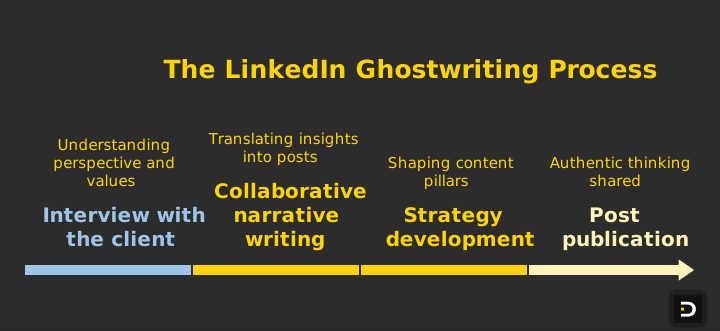
The best ghostwriters preserve your voice, your cadence, your perspective. When someone reads a ghostwritten post from you, they're encountering your authentic thinking, just filtered through professional communication.
A ghostwriter's job includes strategy. They don't just write one-off posts. They help shape your content pillar—the themes you'll return to month after month. For a cybersecurity CEO, that might be "Modern threat landscapes and practical resilience." For an AI founder, it might be "Separating AI hype from engineering reality."
Good ghostwriting disappears. When people read your posts, they should think: "That's exactly how they think."
Why CEOs Need Ghostwriters (And Why It Works)
You don't have time to write LinkedIn posts. Or you do, and they take 90 minutes each, and you don't do it often enough.
The math is simple: a CEO's attention is worth $300–500 per hour. A ghostwriter's is worth $75–150 per hour. If ghostwriting saves you even two hours a week, it pays for itself.
But the real value isn't time savings. It's consistency.
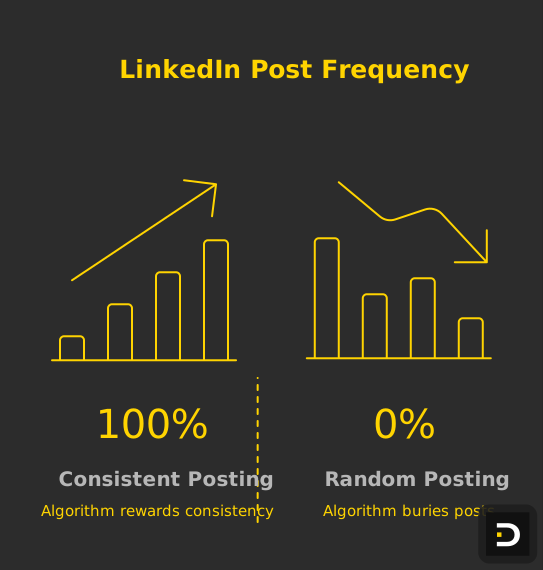
LinkedIn's algorithm rewards consistency. A CEO who posts thoughtfully once every two weeks compounds their reach over months and years. A CEO who posts randomly, disappears for three months, then posts again gets buried in feeds.
A ghostwriter removes the friction that stops you from posting. You don't have to stare at a blank page. You don't have to workshop the headline five times. Your ghostwriter does that. You just review, edit if needed, and publish.
The second reason ghostwriting works: professional-grade posts perform better than first-draft thinking.
Your CEO's best ideas might be half-baked in email form. A ghostwriter's job is to find the kernel of your insight and develop it into something that lands in a CEO's feed and makes them stop scrolling.
They add structure. They sharpen headlines. They place a hook in the opening two lines. They know what makes LinkedIn's algorithm amplify a post versus bury it.
The Three Models: Freelancer vs. Agency vs. In-House
Not all ghostwriters are the same. Here's how the three main models compare:
| Factor | Freelancer | Agency | In-House |
|---|---|---|---|
| Typical cost | $2K–5K/month | $5K–15K/month | $50K–80K/year salary + benefits |
| Onboarding time | 2–3 weeks | 1 week (systems in place) | 2–4 weeks |
| Voice consistency | Medium (person-dependent) | High (processes + templates) | High (embedded in culture) |
| Strategic input | Low (execution-focused) | High (full content strategy) | High (strategic partner) |
| Availability | Medium (limited bandwidth) | High (dedicated account) | Very high (daily access) |
| Flexibility | Medium (skill-dependent) | High (multiple writers if needed) | High (adjustable priorities) |
| Scaling | Hard (one person) | Easy (agency adjusts capacity) | Hard (hiring/recruiting overhead) |
| Long-term cost | $24K–60K/year | $60K–180K/year | $50K–80K/year + benefits |
Freelancer model works best if:
You have a specific, experienced LinkedIn writer you trust, or you're willing to vet several people carefully. The upside is lower cost and simplicity. The downside is inconsistency if your freelancer gets sick, takes another job, or loses interest in your account.
Agency model works best if:
You want someone else to own the whole operation—not just writing, but strategy, posting cadence, engagement tracking, and content planning. Agencies have processes, templates, and senior oversight. The tradeoff is higher cost and a less personal relationship.
In-house model works best if:
You have a founding team that includes someone who loves content, or you're building a brand where your CEO's voice is core to your go-to-market. In-house writers become part of your culture and understand context deeply. The cost is roughly equivalent to a junior marketer or growth person—except the output is directly tied to your executive's visibility.
Most founders start with freelancer or agency. In-house makes sense only if LinkedIn content becomes strategically important enough to fund a dedicated role.
What a Typical Engagement Looks Like
Here's the workflow when you hire a ghostwriter (freelancer or agency):
Week 1–2: Onboarding and voice calibration. The ghostwriter interviews you—usually 60–90 minutes on a call. They ask about your background, what you care about, what you think the industry gets wrong, how you talk to founders in your network. They might shadow a few Slack messages or emails to understand your voice. They read 10–15 of your best existing posts (if you have them) to study what's already working.
Week 3: Content pillar workshop. You and the writer align on 4–6 major themes you'll return to repeatedly. These become your content pillars. For a SaaS CEO, it might be: "Engineering-first go-to-market," "Technical debt and shipping speed," and "Founder mental health." For a security CEO: "Threat modeling in practice," "Insider risk trends," and "Security culture."
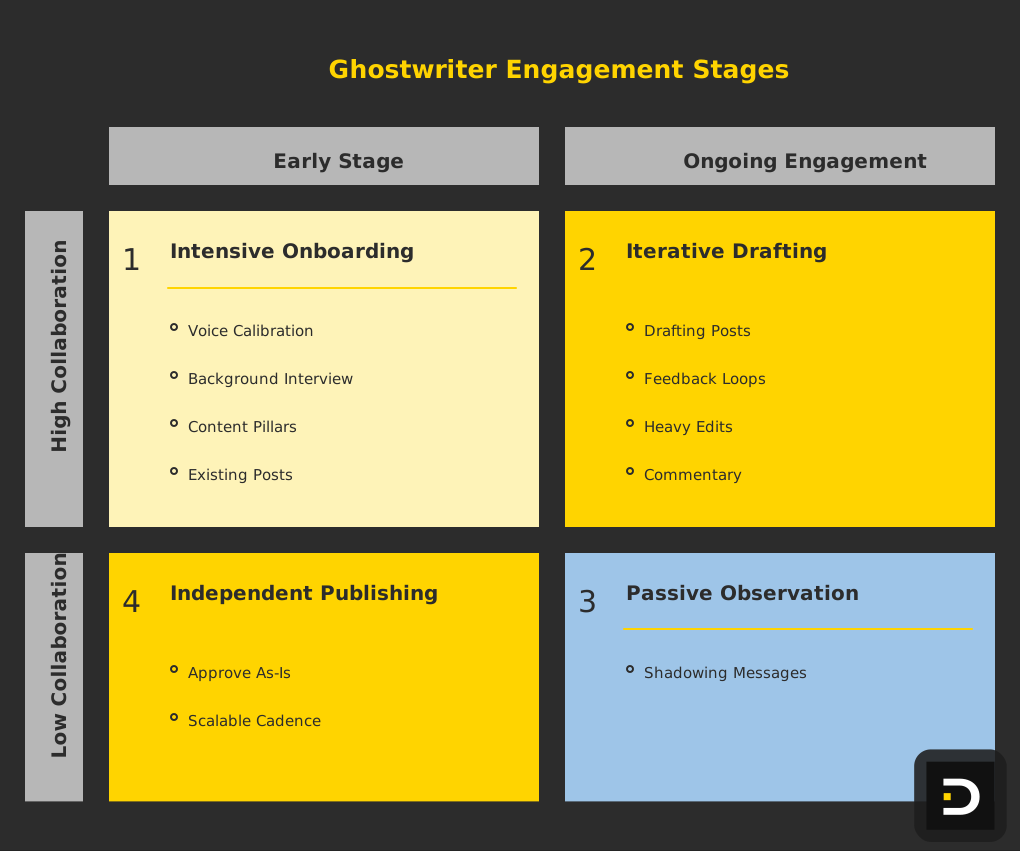
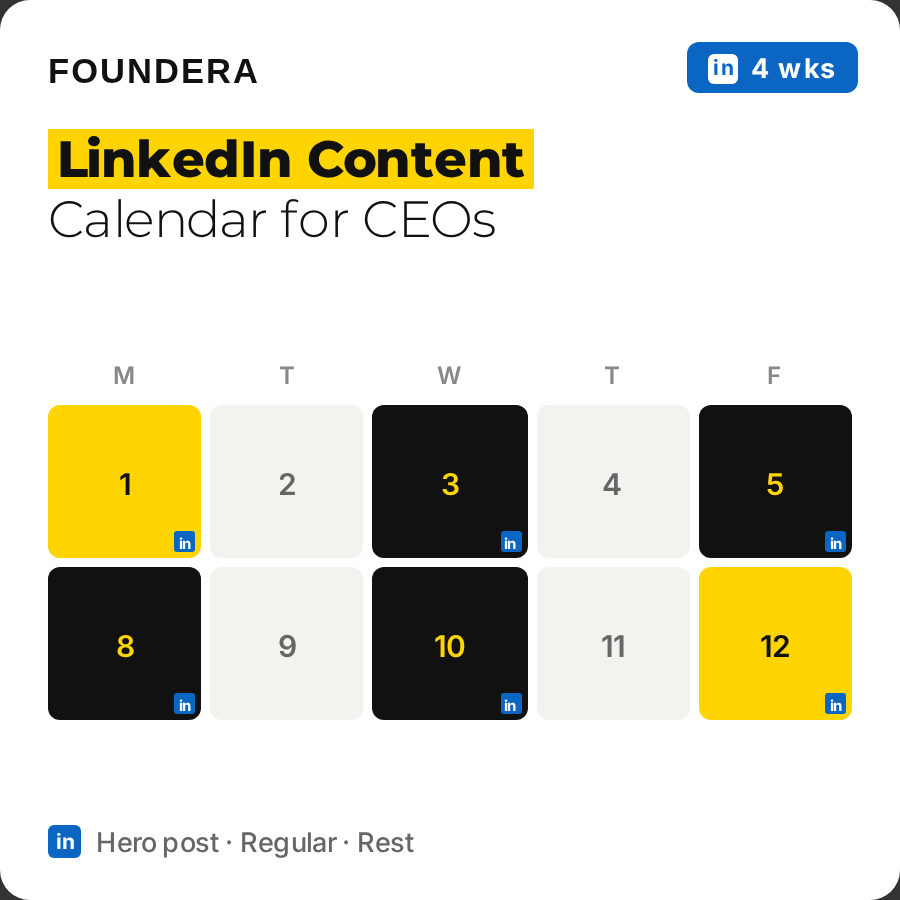
Week 4+: Drafting and feedback loops. The ghostwriter drafts posts—usually one per week, sometimes two. They send drafts to you by Tuesday so you can review and edit. You have 48 hours to mark up changes. They revise by Thursday, and you publish Friday or Monday.
This cadence is scalable. Some engagements do one post every two weeks. Others do three per week. The rhythm depends on your strategy and bandwidth.
Most engagements have a feedback loop: you'll edit 30% of posts heavily, comment on 40%, and approve 30% nearly as-is. Over three months, you'll notice the writer anticipating your voice better. By month six, you're mostly approving posts without major changes.
Monthly check-ins. You and the writer review engagement metrics. Which posts got the most comments? Which themes resonate? What are your competitors posting? You adjust the content pillars slightly and plan the next month.
Typical engagement length: 3–12 months. Most ghostwriting relationships last at least a quarter before they really hit stride.
Pricing Ranges for LinkedIn Ghostwriting
Pricing varies widely depending on experience, location, and whether you're hiring a person or a firm.
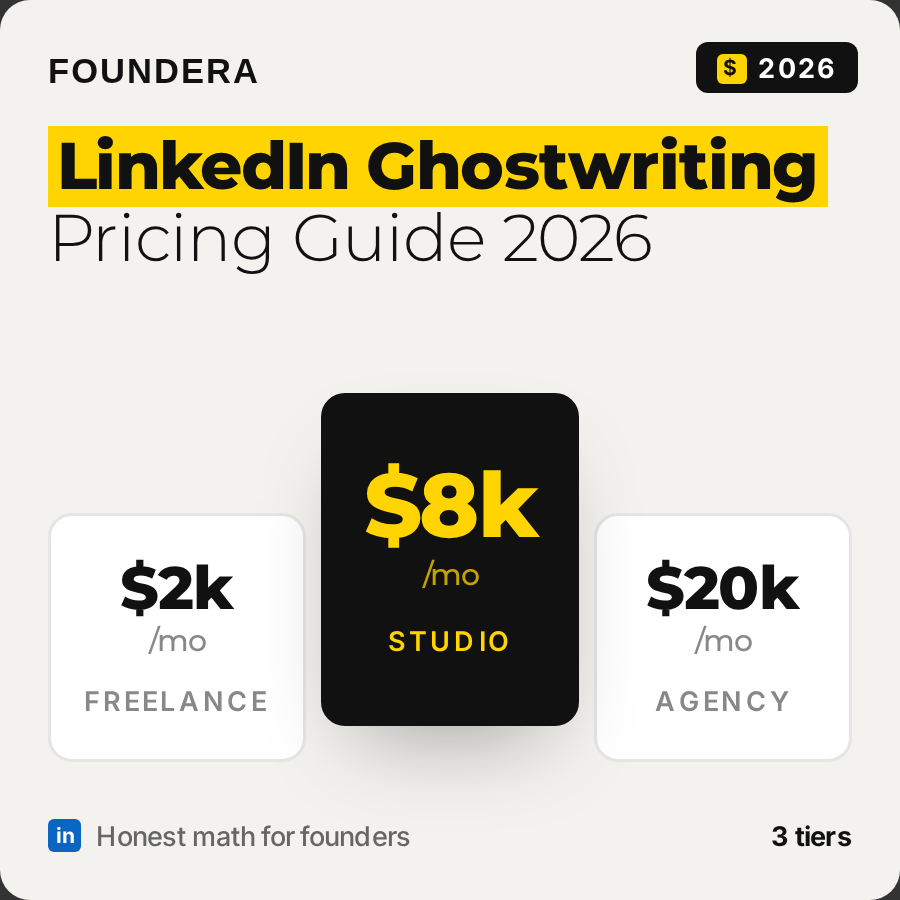
Freelancer ghostwriter: $2,000–5,000/month typically includes 4–8 posts per month, one check-in call, and one content pillar revision per quarter. Cheaper freelancers ($800–1,500/month) might deliver 2 posts, less refinement, and less strategic input. More expensive freelancers ($5,000–8,000/month) often bring prior experience ghostwriting for other executives or are based in expensive markets.
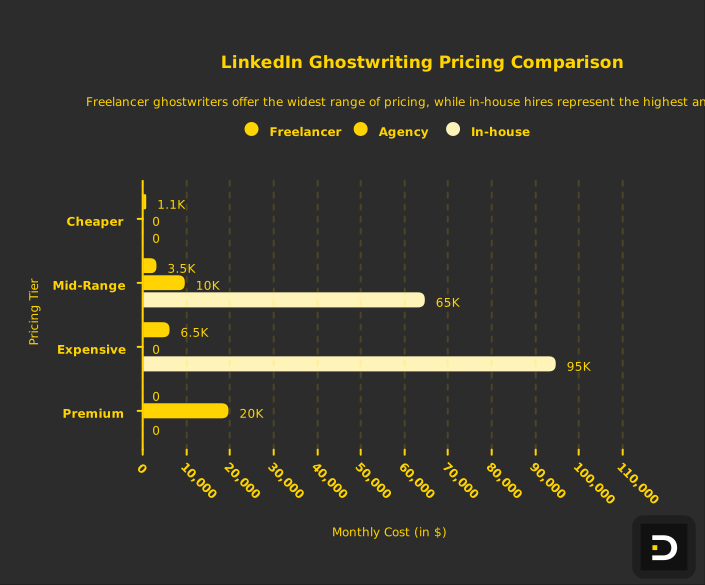
Agency model: $5,000–15,000/month typically includes 4–8 posts per month, bi-weekly strategy calls, full content planning, engagement monitoring, and ongoing revisions. Agencies usually have a project manager, a senior strategist, and a writing team. Some include video scripting or carousel design. Premium agencies (particularly in San Francisco or New York) charge $15,000–25,000/month.
In-house hire: $50,000–80,000/year salary (plus benefits, taxes, overhead) for a mid-level marketing hire who owns your CEO's LinkedIn among other responsibilities. If you hire a dedicated content strategist focused only on LinkedIn and corporate narrative, expect $70,000–120,000/year.
Pricing factors that matter:
Your timezone (US-based is typically more expensive than Latin America or Eastern Europe). The writer's experience level (someone who's ghostwritten for multiple founders commands higher rates). Volume (8 posts/month costs less per post than 2 posts/month). Specialization (a ghostwriter who understands cybersecurity or AI startups charges a premium because they can write with technical credibility).
Most ghostwriting engagements are month-to-month or three-month contracts. Get a trial period (usually 4–6 weeks) before committing long-term. Expect to pay a small onboarding fee even on a trial (this covers their voice discovery and pillar work).
Red Flags When Hiring a Ghostwriter
Not all ghostwriters are good. Here are the warning signs:
They can't show examples of posts they've written. A good ghostwriter should have a portfolio of work they can attribute (by client consent) or anonymized samples. If someone says "I can't show you because of NDAs," that's fair—but they should have some proof of past success.
They promise guaranteed engagement numbers. LinkedIn engagement depends on your network size, your timing, and the algorithm. No honest ghostwriter guarantees 500 comments on every post. If they're claiming unrealistic numbers, they're either lying or they've never done this before.
They write the same post for multiple clients. You might not notice until months in, but if your ghostwriter is recycling frameworks and language across clients, your posts will sound generic. Ask: "How do you ensure each CEO's voice is distinct?" If they don't have a clear answer, move on.
They don't ask about your voice. A ghostwriter who jumps straight to writing without understanding how you talk is probably writing on autopilot. Good writers interview you, read your past communications, ask probing questions about what you believe.
They're unavailable during your onboarding. If they're too busy to spend 90 minutes learning your voice in week one, they'll be too busy to incorporate your feedback later. Onboarding is critical. If they rush it, it shows.
They resist your edits or get defensive. You're the CEO. Your voice matters more than their ego. A good ghostwriter welcomes feedback and refines. A defensive one is a problem waiting to happen.
They don't track metrics. A ghostwriter should send you monthly engagement reports: which posts got the most impressions, comments, profile views. If they're not measuring impact, they're not strategic—they're just typing.
How to Measure ROI
How do you know if paying for ghostwriting is actually worth it?
LinkedIn provides native analytics. Every time you post, LinkedIn tells you: impressions, clicks, comments, profile views, and follower growth.
Baseline metrics to track:
Start with three months of posting cadence without ghostwriting (or use your historical data). Note your average post impressions, average follower growth per month, and average profile views. Then switch to ghostwritten content and track the same metrics over the next three months.
Most well-executed ghostwriting increases post impressions 30–60% within the first quarter. This isn't guaranteed—it depends on your network size and how on-point the content is—but it's a reasonable target.
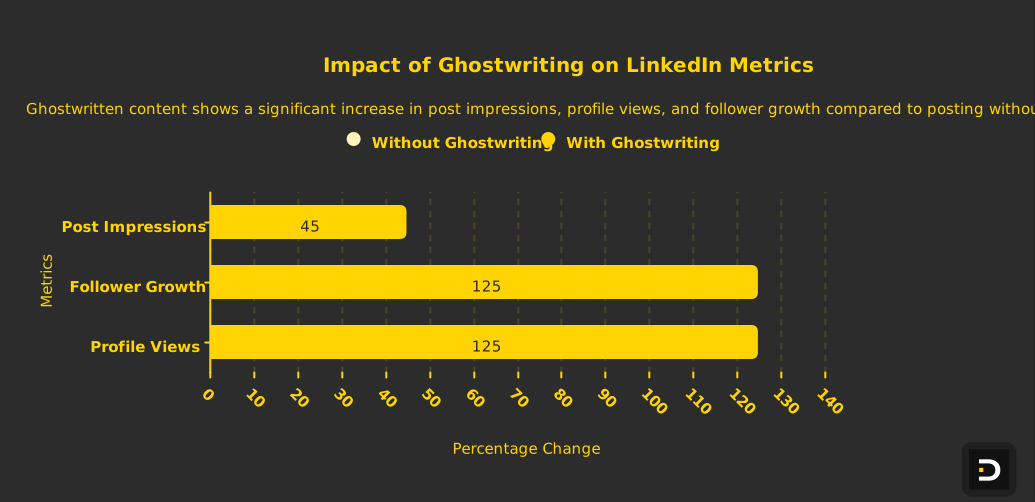
Profile views and follower growth. LinkedIn will show you how many people visited your profile each day. With consistent, high-quality content, you should see 50–200% growth in weekly profile visits. New followers typically come from people who engaged with your posts.
Engagement quality. Not all comments are equal. A comment from a founder or investor in your space is worth more than a generic "Great post!" Track who's engaging: are industry peers engaging, or mostly recruiters and LinkedIn influencers? This matters more than raw comment count.
Sales conversation velocity. This is the hardest metric to tie directly to LinkedIn, but talk to your sales team: are they seeing more inbound interest from people who mention they found you on LinkedIn? Are prospects saying "I've been following your posts"? This is soft data, but it's real impact.
The ROI calculation: If ghostwriting costs $5,000/month and generates 20 qualified conversations per month (assuming your sales team converts 5–10% of those), that's 1–2 new customers from direct LinkedIn sourcing. If your average customer value is $50K+, the ROI is straightforward.
Even if you're not tracking deals, consistent thought leadership shapes perception. Your future prospects might not buy because of a single LinkedIn post. They buy because they've been reading your thinking for six months.
FAQ: Common Ghostwriting Questions
Q: Will people think I didn't write my own posts?
A: Some people might. But here's the reality: most successful executives use ghostwriters, editors, or co-authors. This is industry-standard. If you tweet without an editor, you're the exception. And on LinkedIn, thoughtfulness matters more than raw authenticity. A polished post co-created with a writer beats a rough, unedited brain dump in 99% of cases.
Q: What if my ghostwriter quits?
A: You lose continuity, which is why most people hire agencies or bring writers in-house. Freelancers can quit. That's a real risk. Mitigate it by having a backup writer shadowing your main writer, or by working with an agency that has multiple writers trained on your voice.
Q: Can I use the same ghostwriter for multiple executives?
A: Yes, but it's harder. A skilled ghostwriter can handle 2–3 executives if each has a distinct voice and focus. More than that and quality degrades because they're juggling too much context. Most agencies specialize in single-executive relationships for this reason.
Q: How long until I see ROI?
A: Month one is calibration. Month two, you'll start seeing engagement patterns. Month three, momentum kicks in. Most leaders see meaningful ROI by month four or five. Don't judge a ghostwriter on their first four weeks. Give it a quarter.
Q: Should I tell people my posts are ghostwritten?
A: Not necessary. Many do, many don't. Some CEOs add "with [writer name]" in the comments. Others never mention it. This is a personal choice. Your ghostwriter shouldn't be hidden, but they also don't need to be foregrounded.
Ready to Build Your LinkedIn Thought Leadership?
A ghostwriter can handle the mechanics of posting, freeing you to focus on strategy and running your company. The best ghostwriters don't write for you—they write as you, capturing your authentic voice and scaling your visibility.
If you're considering hiring a ghostwriter, start with a trial period: 4–6 weeks, 2–4 posts, and honest feedback. You'll quickly know if it's working.
Looking for strategic guidance on your executive content approach? Foundera helps tech founders build LinkedIn presence through thoughtful ghostwriting, content strategy, and audience-first tactics. Learn how we work with CEOs on their LinkedIn strategy.
Or explore how other tech executives are scaling their thought leadership: What makes executive LinkedIn content work in 2026?