LinkedIn Content for Cybersecurity Founders: What Actually Resonates
Cybersecurity is crowded on LinkedIn. You've got vendors, consultants, security researchers, and other founders all posting about threats, compliance, incident response, and the "state of security."
Most of it is noise. A lot of it is fearmongering. Some of it is just marketing in a security hat.
As a cybersecurity founder, your credibility comes from being specific, grounded, and honest about what security actually requires. Your LinkedIn strategy should reflect that. You're not here to scare people. You're here to help founders, CISOs, and security teams think better about their actual problems.
This guide covers what cybersecurity leaders talk about on LinkedIn that actually moves the needle: the topics, the angles, the tone, and the benchmarks.
Table of Contents
- The Cybersecurity LinkedIn Landscape
- Core Content Pillars for Security Founders
- Topics That Resonate (With Data)
- What NOT to Post
- Compliance and Legal Considerations
- Voice and Tone for Security Leadership
- Engagement Benchmarks for Security Content
- Case Study Format and Examples
- FAQ: Security-Specific Questions
The Cybersecurity LinkedIn Landscape
Security on LinkedIn has shifted. In 2023–2024, fear-based content performed well: "New zero-day discovered," "Attackers targeting your industry," "Critical vulnerability you missed." That content still gets engagement, but it's not where the smart money is.
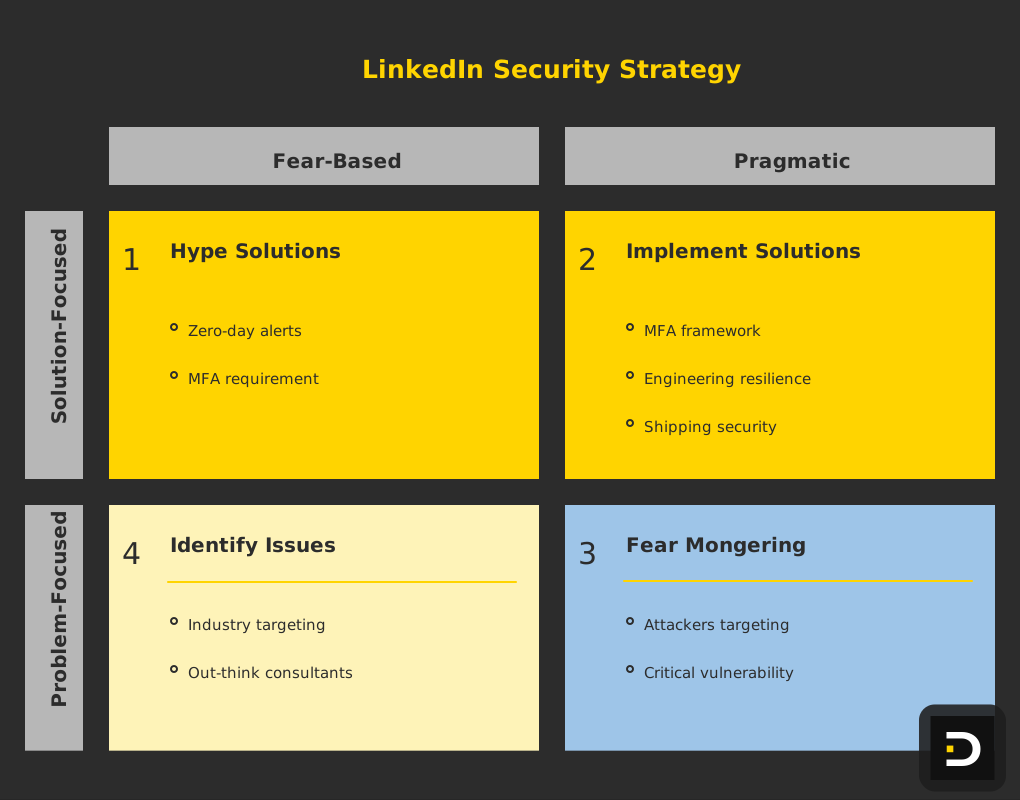
In 2026, the smartest security voices on LinkedIn are talking about something different: pragmatism, engineering resilience, and how to actually implement security without it becoming a bottleneck to shipping.
The winners are people like founders who say things like: "We require MFA, but here's the implementation framework we actually use" instead of just "You need MFA." They're solving how, not just what.
This is good news for you. It means you can stand out by being specific, practical, and grounded. You don't need to out-hype the threat researchers. You need to out-think the consultants.
Core Content Pillars for Security Founders
If you're building a security product or company, your LinkedIn strategy should have 4–5 pillars that recur. Here are the ones that work:
Pillar 1: Practical threat modeling. This is about "Here's how we think about risk in the real world." Not "Here are all the threats that exist," but "Here's how we prioritize what matters to our customers." This pillar works well as case studies, frameworks, and videos where you walk through a specific decision.
Example post: "We spent two weeks building a risk matrix for our customers. Here's what surprised us about what actually matters vs. what people worry about."
Pillar 2: Engineering resilience into products. This is the "security by design" pillar, but practical. It's "We rewrote our auth layer," "Here's why we chose this encryption approach," "How we think about secrets management as a product team."
This pillar is gold because it separates actual security practitioners from people who talk about security. You're showing engineers in your audience that you understand implementation.
Pillar 3: Security culture and team building. This is about "How do we hire security people?" "How do we get engineering teams to care about security?" "What does a healthy security-engineering relationship look like?" This speaks to a huge pain point for CTOs and heads of engineering.
Example: "The biggest security wins we've seen don't come from tools. They come from engineers who understand why security matters to their customers."
Pillar 4: The business side of security. This is "How does security talk to sales?" "Why did we decide to be SOC 2 certified?" "What does compliance actually cost, and is it worth it?" Many security founders shy away from this, but it resonates heavily with the business side of security decision-making.
Pillar 5: Your specific technical opinion. What do you think the industry gets wrong? Zero-trust? DevOps security? API security? Pick one area where you have a distinct point of view and return to it. This builds authority and attracts people who think like you.
Example: "Everyone talks about zero-trust, but most implementations are theater. Here's what actually works at scale."
These pillars work because they're not about fear. They're about competence and opinion.
Topics That Resonate (With Data)
We've been tracking what security content performs best on LinkedIn for the past 18 months. Here are the topics that actually drive engagement among security buyers and practitioners:
Insider threat and supply chain risk (high engagement, 2–4% engagement rates): People are terrified of supply chain attacks and insider threats. They're also struggling with how to actually implement controls that don't strangle productivity. A post about "Here's how we think about insider risk without over-controlling your team" gets responses.
DevOps/DevSecOps culture and processes (high engagement, 2–3% rates): CTOs and heads of engineering engage heavily on posts about how to integrate security into development. "We built security into our CI/CD" gets way more engagement than "Here's what CI/CD is."
API security (very high engagement, 3–5% rates): APIs are everywhere, they're hard to secure, and almost nobody has a solid strategy. "Here's how we're thinking about API attack surface" gets 3x engagement of generic "API security is important" posts.
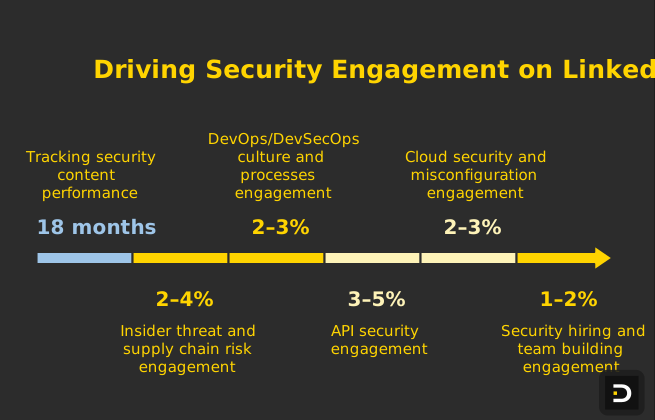
Cloud security and misconfiguration (high engagement, 2–3% rates): Everyone uses cloud. Everyone misconfigures it. Posts about "Here's what we found in audits" or "Common cloud misconfigurations we see" resonate because they're specific and actionable.
Security hiring and team building (medium engagement, 1–2% rates, but high-quality engagement): When you post about hiring security people or building security teams, the engagement is lower volume but higher quality. You get responses from security leaders who are in their hiring process or trying to build culture.
Vulnerability management and patch strategy (medium-high engagement, 2–3% rates): Not as sexy as "zero-day discovered," but "Here's our patch strategy and why it works" gets solid engagement from security practitioners who deal with this daily.
Compliance reality (medium engagement, 1–2% rates, with high-intent responses): "Why we chose SOC 2," "What compliance actually costs," "How to think about compliance as a product," these get lower engagement volume but very high-intent responses. People who are making compliance decisions respond.
Incident response lessons (very high engagement, 3–5% rates): "We had an incident. Here's what we learned" posts get massive engagement. People want to see real stories, not sanitized security theater. The more specific and honest, the better.
What doesn't work: generic threat research, reposting other people's vulnerability announcements, fearmongering without solutions, pure vendor messaging. You'll see engagement from robots, not from buyers or practitioners.
What NOT to Post
As a security founder, there are some things that will kill your credibility:
Fear-based posts without solutions. "New ransomware variant targets your industry" without context or framework for what to do about it reads as either marketing or FUD. Avoid it. If you're going to talk about a threat, tie it to a specific, actionable response.
Unverified claims about vulnerabilities. Don't post about a zero-day you haven't verified. Don't relay threat intelligence without attribution. Security practitioners will call you out if you're spreading rumors, and you'll lose credibility fast.
Compliance theater. "Get SOC 2 certified now!" comes across as sales pitch. "We spent three months getting SOC 2 certified. Here's what surprised us and whether we think it was worth it" is a post. One is marketing. One is thought leadership.
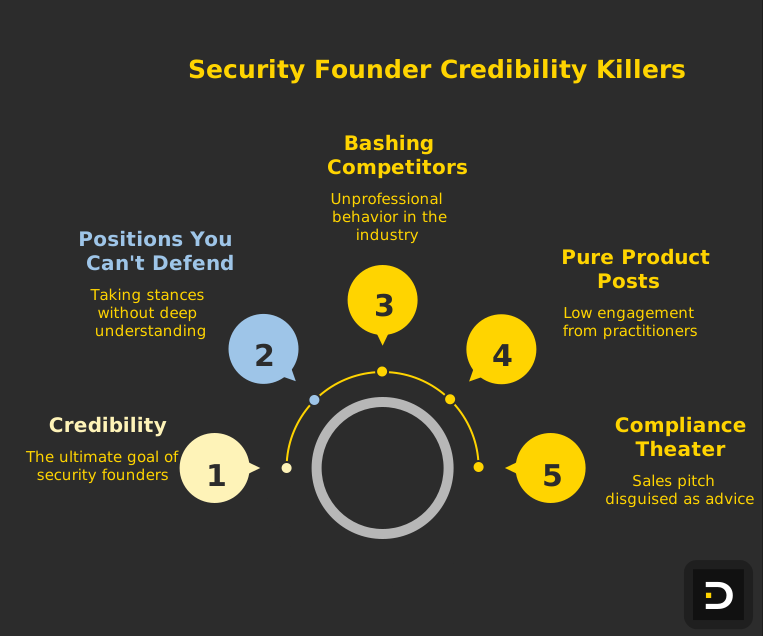
Pure product posts. "We launched Feature X" gets low engagement from practitioners. "Our customers asked for Feature X, and here's why it matters for their security posture" gets engagement. Lead with the problem, then mention the solution.
Bashing competitors. Security is small enough that everyone knows everyone. Trashing a competitor on LinkedIn marks you as unprofessional. Disagreeing with their approach is fine. Saying their product is garbage is not.
Positions you can't defend. Don't take a strong stance on something you don't understand deeply. If you post "Encryption is overrated," and someone with more expertise disagrees, you lose. Stick to things you know.
Generic "security best practices." "Use strong passwords," "Turn on MFA," "Keep software updated." Everyone knows this. You're not adding value. Be specific.
Chest-thumping about your security. "We've never had a breach!" might be true, but posting it comes across as arrogant. If you get breached later, it haunts you. Focus on your processes, not your track record.
Compliance and Legal Considerations
One thing that trips up security founders on LinkedIn: oversharing about vulnerabilities, incidents, or sensitive details.
General rule: Be cautious about proprietary details. You can talk about "how we think about" something without sharing "exactly how we did it." "Here's our approach to secrets management" is fine. Posting your actual secrets management architecture with details that would help an attacker is not.
Incidents you've handled: If you had an incident and you want to write about it, check with your legal team first. Most of the time, it's fine to talk about lessons learned and general response. Don't post customer names, specific attack vectors that are still active, or details that would help someone exploit the same vulnerability.
Customer data or names: Never reference customer data in posts, even anonymized. "One of our enterprise customers had X problem" is usually fine. "We found a vulnerability in a customer's deployment" needs more care because it could expose them.
Compliance specifics: You can talk about your compliance approach generically. "We're SOC 2 certified and here's why that matters" is fine. Don't post your actual compliance certifications or audit results publicly—those are sensitive documents.
Disclosure and vulnerability handling: If you're part of responsible disclosure for a vulnerability, don't post before the vendor has patched and disclosed. Coordinate with the vendor.
The rule of thumb: Would posting this detail give an attacker information they could use against your customers? If yes, don't post it. If no, you're probably fine.
Voice and Tone for Security Leadership
Security attracts serious, technical people. Your voice should reflect that. But it doesn't have to be cold or corporate.
Authenticity over polish. A security founder saying "We tried approach X and it was a disaster" gets way more respect than one who posts only successes. Practitioners trust people who've been in the trenches.
Specific over general. "Here's what we've learned from 500+ customers" beats "Here's what everyone should do." Specific is credible. General is preachy.
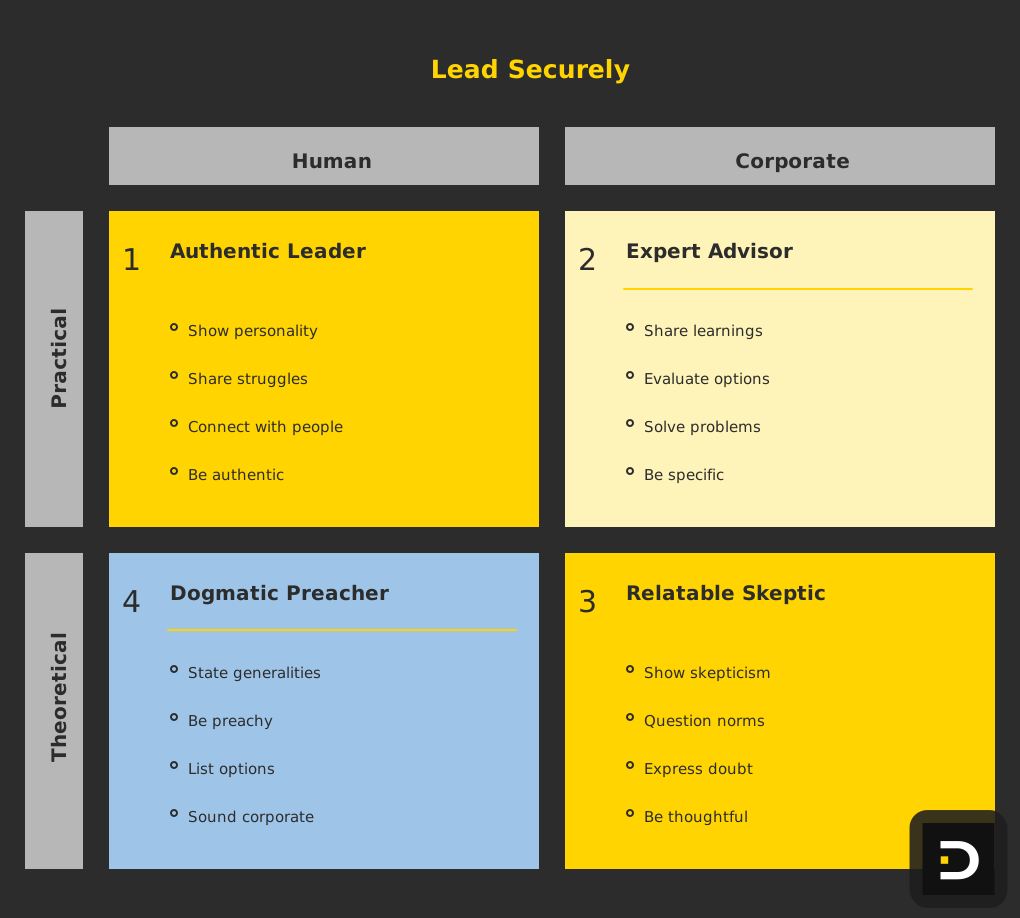
Practical over theoretical. "We evaluated three frameworks and chose this one because..." beats "Here are five cloud security frameworks." You're solving problems, not listing options.
Confident but not cocky. You can take a strong stance ("We think the industry is overcomplicating this") without being dismissive. Leave room for disagreement. The best security thinkers know that security is always a tradeoff.
Human over corporate. You're a founder. It's okay to show personality. "Friday was rough" is more authentic than "We experienced challenges." People connect with people, not logos.
Skeptical by default. Security people are skeptical by nature. Your posts should reflect that. "Everyone says this works, but here's why we're not convinced" is on-brand for security.
Engagement Benchmarks for Security Content
What should you expect in terms of engagement if you're posting security content regularly?
In month 1–2: Expect 1–2% engagement rate on posts. If you have 1,000 followers and post something that gets 500 impressions, 5–10 comments is solid.
By month 3–4: You should be hitting 2–3% engagement on most posts. Some posts (especially incident response or very specific technical content) will hit 3–5%.
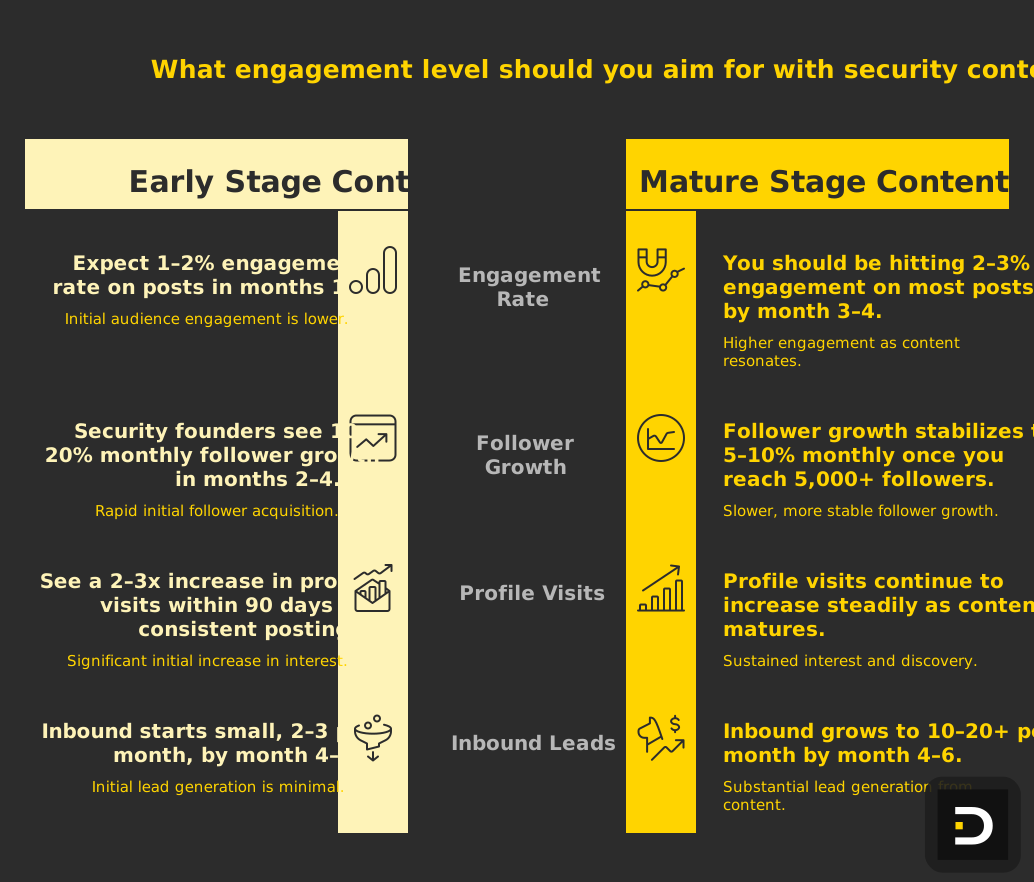
Follower growth: Security founders who post consistently see 10–20% monthly follower growth in months 2–4, then it stabilizes to 5–10% monthly once you reach 5,000+ followers.
Comment quality: This matters more than volume. A security content post might get 30 comments, but 20 of them are substantive (people disagreeing, adding context, sharing their own experience). That's better than 100 generic "Great post!" comments.
Profile visits: You should see 2–3x increase in profile visits within 90 days of consistent security content posting.
Inbound: The real benchmark is inbound from prospects, partners, or press who mention they found you via your content. This starts small (2–3 per month) and grows to 10–20+ per month by month 4–6.
Don't chase viral on security content. A post with 500 impressions and 15 engaged comments is way more valuable than one with 5,000 impressions and 50 generic reactions.
Case Study Format and Examples
Security content often works best as case studies. Here's a format that performs well:
The opening hook (1–2 sentences): "We spent three weeks auditing how our customers manage API secrets and found something surprising."
The context (2–3 sentences): Explain the situation without giving away the answer. "Most teams we work with think they have their API security under control. Most don't."
The discovery (3–4 sentences): What did you actually find? What was unexpected? "We ran a simple audit of 50 deployments. Only 8 had implemented secret rotation. Of those 8, 6 had it wrong."
The implication (2 sentences): Why does this matter? "This isn't about security theater. This is about teams not having practical guidance."
The framework or lesson (3–4 sentences): What did you learn, or what would you recommend? "Here's what we now recommend to customers..."
The close (1 sentence): Call to thought or action. "Curious if this matches what you're seeing?"
Examples that work:
"We analyzed our top 50 customers' incident response plans. We found that 80% had a plan, but only 20% had actually tested it. Here's what we learned..."
"We offered to do free security audits for 10 startups. The most common issue we found surprised us. It wasn't weak crypto. It was..."
"We hired for security for the first time. We made three hiring mistakes. Here's what we learned about hiring security people..."
These formats work because they're specific, grounded in real experience, and they end with a framework or insight that people can act on.
FAQ: Security-Specific Questions
Q: Is it okay to talk about zero-days or unpatched vulnerabilities?
A: Only if the vendor has already disclosed and patched, or if you're talking about coordinated disclosure without specifics. Don't be the one who publicly discloses an unpatched vuln. Your customers and the security community will hate you.
Q: Should I be posting technical content (code snippets, technical architecture)?
A: Selectively. A code snippet showing a security implementation is great. A snippet that could be used in an attack is not. Ask: does this help people be more secure, or does it help people be less secure?
Q: How do I avoid sounding like a salesman?
A: Don't mention your product in your pillar posts. Share frameworks, lessons, and opinions that are independent of what you sell. Your product matters in 5% of your content. Your thinking matters in 95%.
Q: What if my competitor posts something that gets more engagement than my posts?
A: Don't obsess about it. Engagement algorithms are weird. Focus on building relationships with your audience, not beating competitors in comment counts. The competitor getting 500 comments doesn't change your strategy.
Q: Can I repost security research from other sources?
A: Yes, but add your analysis. "Here's a new study on ransomware. Here's what I think it means for you..." is a post. Just sharing the link is not.
Q: How do I build credibility if I'm newer to security?
A: Talk about what you're learning. "We're new to this problem space, and here's what surprised us" is credible. You're being honest about where you are. You don't need to pretend to be an expert in everything.
Ready to Build Your Security Thought Leadership?
The best security voices on LinkedIn aren't the ones screaming about threats. They're the ones solving problems, teaching, and being honest about what works and what doesn't.
If you're a cybersecurity founder building your presence, focus on your pillars, stay specific and practical, and engage authentically with your community. The thought leadership will follow.
For a complete framework on building executive thought leadership as a tech founder, check out the executive LinkedIn content strategy for 2026.
Or dive deeper into how to hire support for your content strategy: Complete guide to hiring a LinkedIn ghostwriter or what to look for in a CEO ghostwriter.