Table of Contents
- Why Seed Stage Founders Need LinkedIn Authority
- The Authority-First Content Strategy
- Content Pillars That Build Credibility
- Posting Frequency and Timing
- Building Engagement Without a Large Following
- Measuring Success at the Seed Stage
- Common Mistakes to Avoid
- FAQs
- Conclusion
Why Seed Stage Founders Need LinkedIn Authority
Here's the mistake most seed stage founders make: they wait for traction before building their personal brand. By the time they have impressive numbers to share, they've missed months of relationship building that could have accelerated their fundraising, hiring, and partnership efforts.
LinkedIn authority multiplies everything you do as a founder. Investors check your profile before pitch meetings. Top talent evaluates your thought leadership when deciding whether to join your team. Strategic partners assess your industry credibility before taking meetings.
The challenge? Establishing this credibility when you can't showcase massive user growth, major partnerships, or industry awards. You need a different playbook—one that highlights expertise without relying on traditional success metrics.
At the seed stage, your LinkedIn content serves three purposes: establishing domain expertise, building relationships with key stakeholders, and creating social proof that supports your fundraising and hiring efforts.
The Authority-First Content Strategy
Authority-first content demonstrates expertise rather than promoting achievements. Instead of highlighting accomplishments, you share insights from your market observations and learning journey.
This strategy works perfectly for seed stage founders—no traction numbers needed. Establish credibility through thoughtful industry analysis, customer research discoveries, and product development insights.
Position yourself as someone who deeply understands the problem space, regardless of where you are in building the solution. This type of LinkedIn ghostwriting for founders approach helps busy entrepreneurs maintain consistent thought leadership without dedicating hours to content creation.
Show your market knowledge, customer empathy, and strategic thinking. Your audience cares far more about these qualities than revenue figures or user metrics at this stage.
Content Pillars That Build Credibility
Successful seed stage founders build authority around four content pillars that don't require traction data.
Industry Analysis and Trends
Share your take on where your industry is moving. Discuss regulatory changes, technology developments, or shifts in customer behavior you've observed. Show strategic market thinking that goes beyond your product.
Customer Research and Insights
Share what you've learned from customer interviews, surveys, and user research. These posts prove your market understanding without needing usage statistics.
Behind-the-Scenes Building
Give glimpses into your startup journey while keeping proprietary details private. Talk about hiring challenges, product decisions, or lessons from early customer conversations.
Thought Leadership on Broader Topics
Weigh in on industry issues, share frameworks for making decisions, or offer your perspective on startup challenges. This type of LinkedIn thought leadership for SaaS founders positions you as a strategic thinker beyond your specific product.
Each pillar serves a different purpose. Industry analysis shows market knowledge. Customer insights demonstrate validation. Building content creates authenticity. Broader thought leadership establishes strategic credibility.
Posting Frequency and Timing
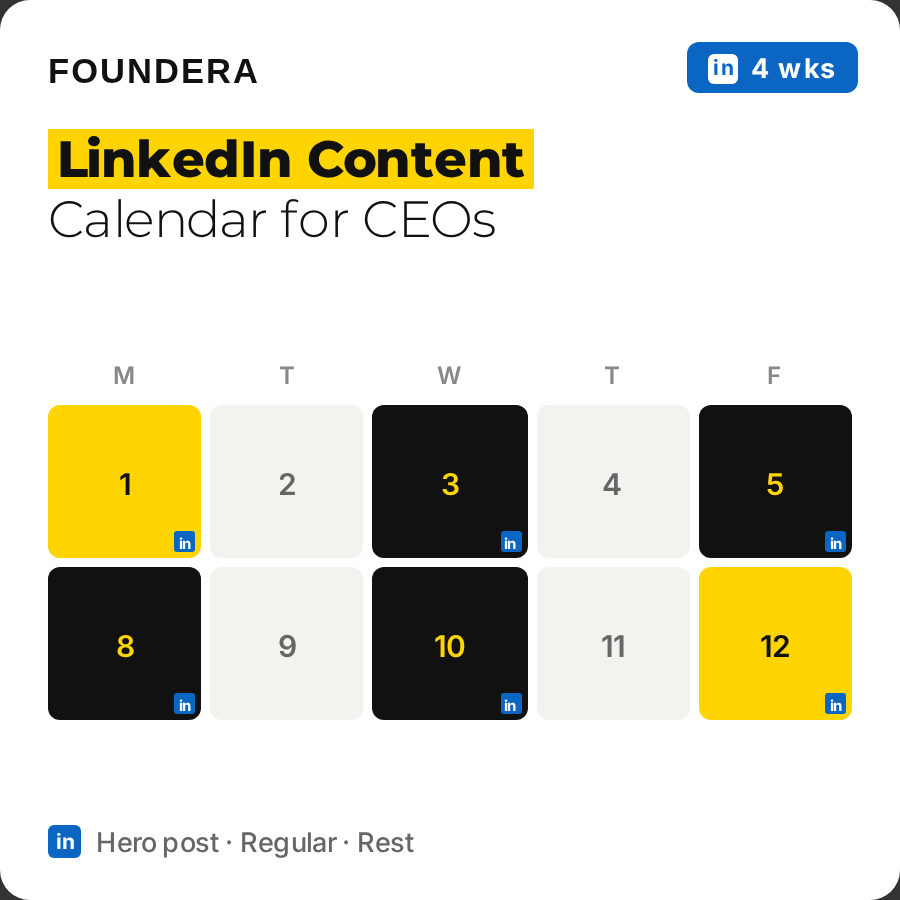
Consistency beats frequency at the seed stage. Two high-quality posts per week outperform daily mediocre content.
Most successful seed stage founders post 2-3 times weekly—one substantial post and 1-2 shorter updates or comments on industry news. This schedule stays sustainable while maintaining visibility in your network's feeds.
Timing depends on your audience, but posts generally perform well between 8-10 AM and 5-7 PM on weekdays. Tuesday through Thursday see the highest engagement rates.
Create a predictable schedule. When your network expects content every Tuesday and Thursday at 9 AM, they'll watch for it.
Building Engagement Without a Large Following
For seed stage founders, engagement quality trumps follower quantity. Fifty meaningful comments from industry peers create more value than 500 random likes.
Prioritize starting conversations over making announcements. Ask questions, share contrarian (but professional) viewpoints, and respond thoughtfully to every comment.
Engage meaningfully with content from investors, potential customers, industry leaders, and fellow founders. Your thoughtful comments on others' posts often reach more people than your original content, especially while you're building your following.
Join relevant LinkedIn groups and participate in discussions. This helps you connect with people interested in your industry without needing them to follow you first.
Regular engagement builds relationships that become valuable later. These connections often turn into customers, investors, advisors, or team members—which is why developing personal branding for Series A founders becomes even more critical as you prepare for your next funding round.
Measuring Success at the Seed Stage
Traditional metrics like follower growth and post reach matter less at the seed stage than relationship-building indicators.
Focus on meaningful conversations your content sparks. Track direct messages from potential customers, investor outreach following your posts, or connection requests from industry peers.
Monitor how your LinkedIn presence supports your other startup activities. Do investors bring up your posts during pitch meetings? Do job candidates reference your content in their applications?
Pay attention to comments from relevant industry figures, shares from your target market, and inbound interest from ideal customer profiles.
Going viral isn't the objective—building relationships with people who can help your startup succeed is what matters.
Common Mistakes to Avoid
Seed stage founders often make these critical errors when building LinkedIn authority:
Over-promoting without value. Not every post should be about your product. Provide value to your audience first.
Sharing fake-it-till-you-make-it content. Don't pretend to have more traction than you do. Authenticity builds stronger relationships than inflated metrics.
Inconsistent posting. Sporadic content creation makes it harder to build momentum and stay top-of-mind with your network.
Ignoring comments and engagement. Failing to respond to comments wastes the relationship-building opportunity LinkedIn provides.
Copying other founders' content styles. Your perspective and voice should be unique to your experience and market.
Focusing only on fundraising content. While raising capital matters, your content should serve multiple audiences including potential customers and employees.
FAQs
How often should seed stage founders post on LinkedIn?
Aim for 2-3 high-quality posts per week rather than daily posting. Consistency and value matter more than frequency at this stage.
What should I post about if I don't have traction metrics to share?
Focus on industry insights, customer research findings, building lessons, and thought leadership on broader startup topics rather than company metrics.
How do I build engagement without a large following?
Focus on meaningful conversations over vanity metrics. Comment thoughtfully on others' posts and ask questions to spark discussion.
Should I share challenges and setbacks in my LinkedIn content?
Absolutely—authentic content about challenges builds credibility and relatability. Just frame setbacks as learning opportunities rather than complaints.
How long does it take to build LinkedIn authority as a seed stage founder?
With consistent posting and engagement, you'll typically see meaningful authority develop within 3-6 months, though relationship building is an ongoing process.
What's the difference between personal branding and company marketing on LinkedIn?
Personal branding establishes you as a thought leader and industry expert, while company marketing directly promotes your product or service.
How do I balance transparency with protecting competitive information?
Share insights and lessons learned while keeping proprietary data, specific customer details, and detailed product roadmaps private.
Conclusion
Building LinkedIn authority before you have traction gives seed stage founders a major advantage in fundraising, hiring, and business development. Focus on demonstrating expertise and market knowledge rather than promoting achievements you don't yet have.
Start with consistent, valuable content that serves your audience's needs. Engage authentically with your network and measure success through relationship building rather than vanity metrics.
Your LinkedIn presence becomes a valuable asset that compounds over time, supporting every aspect of your startup's growth. The authority you build today pays dividends throughout your entrepreneurial journey.
Ready to establish your thought leadership without the time investment? Learn more at foundera.co.