Executive thought leadership used to be optional. In 2026 it isn't. CISOs check the CEO's LinkedIn before they take a meeting. Senior engineers read your last three posts before they accept your offer. VCs scroll your feed before they call you back. The CEOs who show up consistently win deals, hires, and rounds the others don't.
The catch: the same CEOs who need it most have the least time to write it. The result is most executives either skip thought leadership entirely or post sporadically with generic content that does nothing for them.
This is the 2026 framework we run at Foundera for tech CEOs whose time is the company's bottleneck. Built for people who have 20 minutes a week, not 5 hours.
What executive thought leadership actually means in 2026
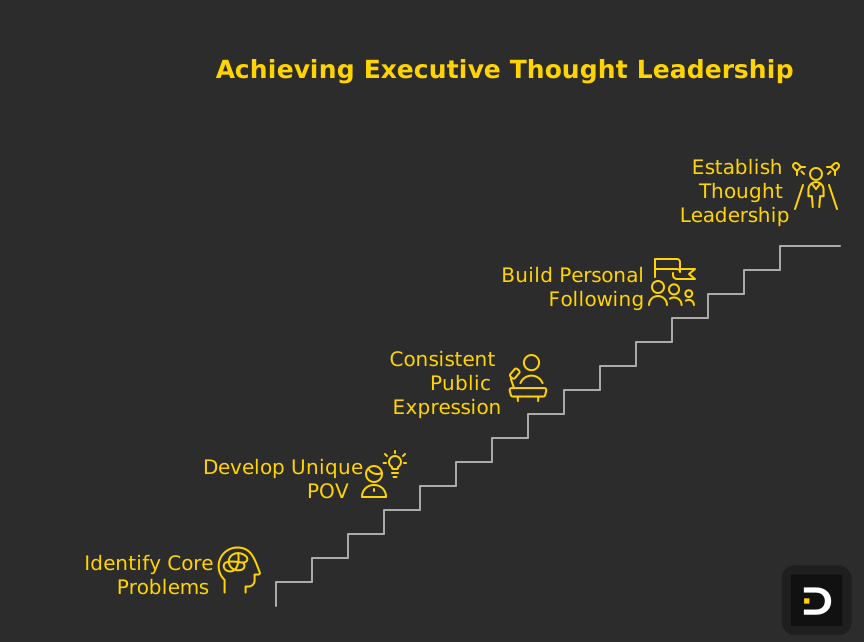
Executive thought leadership is the systematic public expression of a CEO's point of view on the problems their company exists to solve. Not a press release. Not a marketing blog with the CEO's face on it. A consistent, identifiable voice that shows the market how this person thinks.
Three things separate it from regular content marketing:
- It's tied to a person, not a brand. Buyers, hires, and investors follow people. The company logo gets a like; the CEO's face gets a reply.
- It carries a POV that an algorithm could not generate. Specific opinions. Stated trade-offs. Things competitors disagree with.
- It compounds. Each post strengthens the prior ones. The hundredth post is worth more than the first ten combined.
If your content is interchangeable with another founder's in your space, it's not thought leadership. It's noise.
Why busy CEOs need a framework, not more posts
Most CEOs trying to do this fail in the same way. They post twice in week one, three times in week two, then disappear for two months. Then they read an article about LinkedIn, try again, and stop again. The pattern is so common it has a name in our notes: the burst-and-vanish CEO.
The fix is not more posts. The fix is a framework that runs while the CEO does the actual job of running the company.
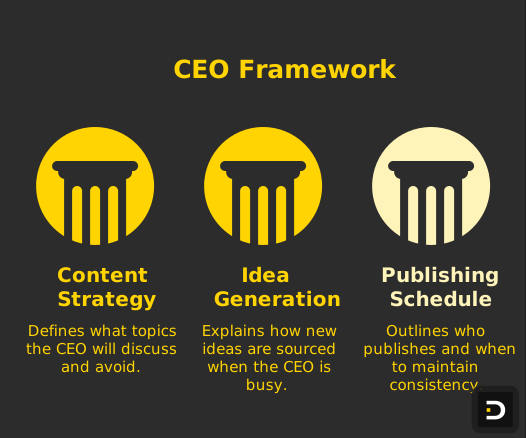
A real framework answers four questions:
- What does this CEO talk about, and what do they refuse to talk about?
- Where do the ideas come from when the CEO isn't writing?
- Who publishes, and when?
- Who decides whether a post is "on" or "off"?
If those four questions don't have clear answers, nothing scales.
The 4-pillar Foundera framework
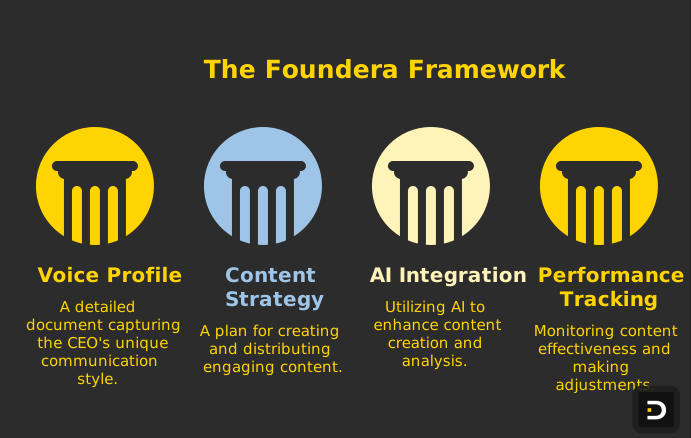
We've run this on 50+ tech CEO accounts in cybersecurity, AI, DevOps, and B2B SaaS. It works because every pillar is decoupled from the CEO's calendar.
Pillar 1: The voice profile
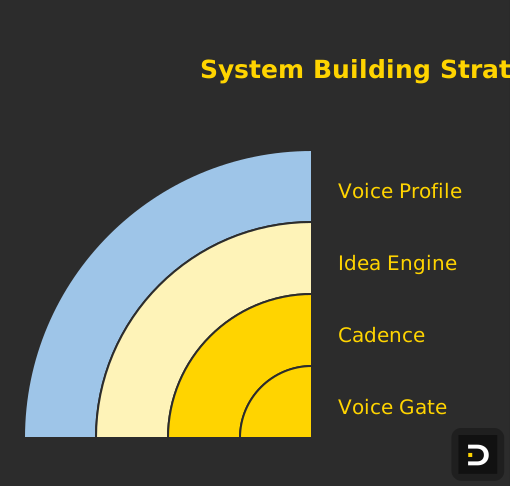
Before any content gets written, we build a 5-page document that captures how this CEO actually talks: phrases they use, phrases they refuse to use, what they think about competing ideas, the three things they care about most, the three things they avoid.
This document is the input to every post. It also catches AI-sounding drafts on day one. If a draft doesn't read like the voice profile, it doesn't ship.
Pillar 2: The idea engine
CEOs generate ideas constantly. They just don't write them down. We build a capture system that lives wherever the CEO is most: usually a Slack channel they DM themselves, or a 15-minute weekly voice memo. Ideas in, never out except into draft posts.
This pillar removes the biggest excuse: "I don't know what to write about." There are always 30 unconverted ideas sitting in the queue.
Pillar 3: The publishing cadence
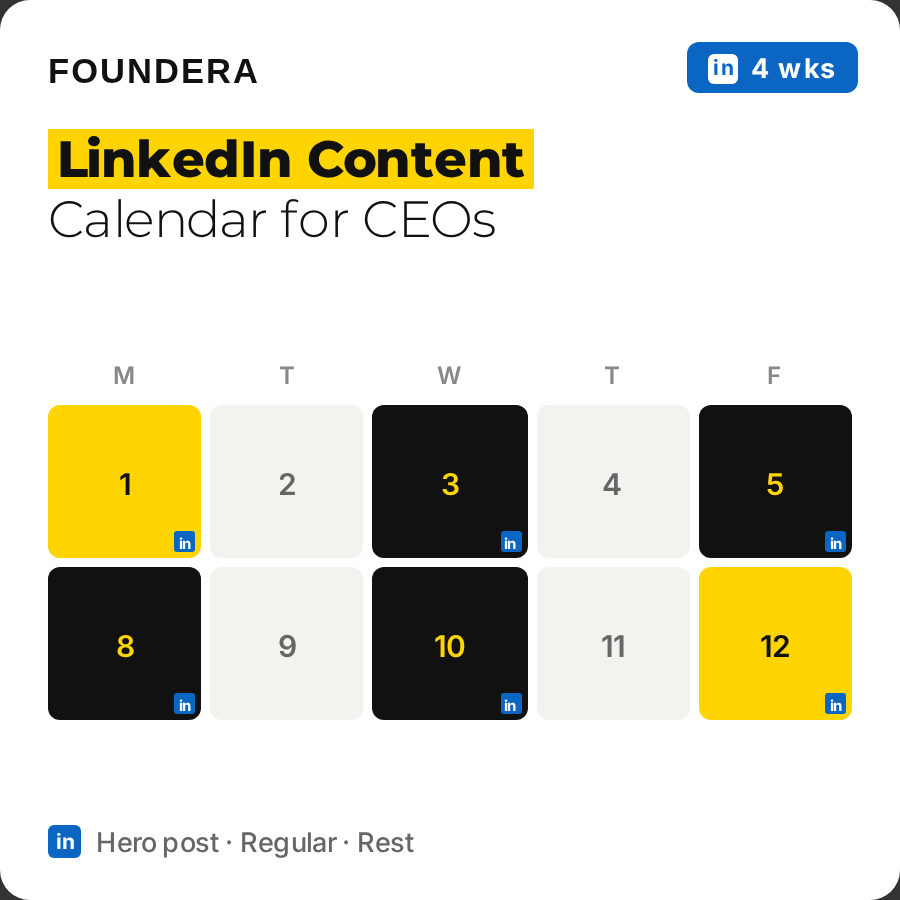
Two posts per week, same days every week, same approximate times. Not three some weeks and zero others. The cadence is the half of the framework that LinkedIn's algorithm rewards.
For a busy CEO, the publishing happens through a ghostwriter or content lead. The CEO's job is approval, not writing.
Pillar 4: The voice gate
One person on the team decides whether a draft sounds like the CEO or doesn't. If they say no, the draft doesn't ship until the voice issue is fixed. No exceptions for deadline pressure.
This is the pillar that protects everything else. Without a voice gate, the framework gradually drifts and the CEO's account starts sounding like every other AI-drafted feed.
Time-starved CEO checklist
If you're a CEO with 20 minutes a week, this is how you spend it:
- 5 minutes: voice memo of ideas, observations, and reactions to news in your space
- 10 minutes: review and approve 2 drafts your team prepared from your prior memos
- 5 minutes: respond to high-signal comments on your last 2 posts
That's the entire investment. Everything else (drafting, scheduling, amplifying) is delegated. If you're spending more than 20 minutes and you don't enjoy it, the framework is broken.
Common mistakes that kill executive thought leadership
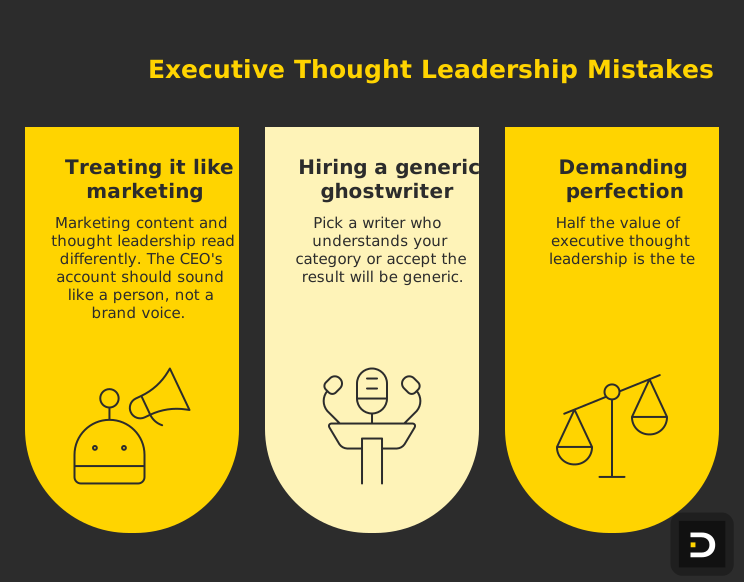
Mistake 1: Treating it like marketing. The marketing team writes a draft, the CEO posts it, nobody engages. Marketing content and thought leadership read differently. The CEO's account should sound like a person, not a brand voice with the CEO's headshot.
Mistake 2: Hiring a generic ghostwriter. A writer who has never sold cybersecurity software cannot write a cybersecurity CEO's voice no matter how good the prose is. Pick a writer who understands your category or accept the result will be generic.
Mistake 3: Demanding perfection. Half the value of executive thought leadership is the texture of imperfection. CEOs who only post pristine essays sound robotic. The occasional rough thought, half-formed idea, or "I changed my mind" post is what makes the account human.
Mistake 4: Tracking the wrong metrics. Likes are vanity. Track inbound DMs from your target audience, deal conversations referencing your content, and inbound hires citing a specific post. Those are real outcomes.
How to measure ROI
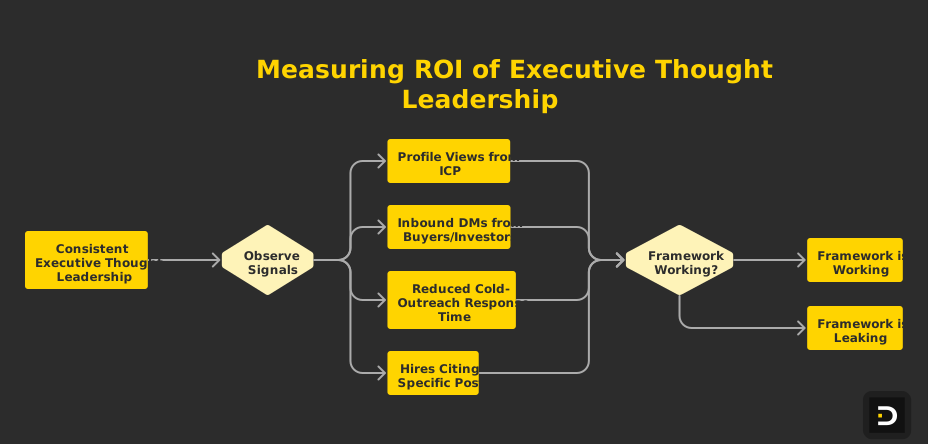
After 90 days of consistent executive thought leadership, you should see signal on at least three of these:
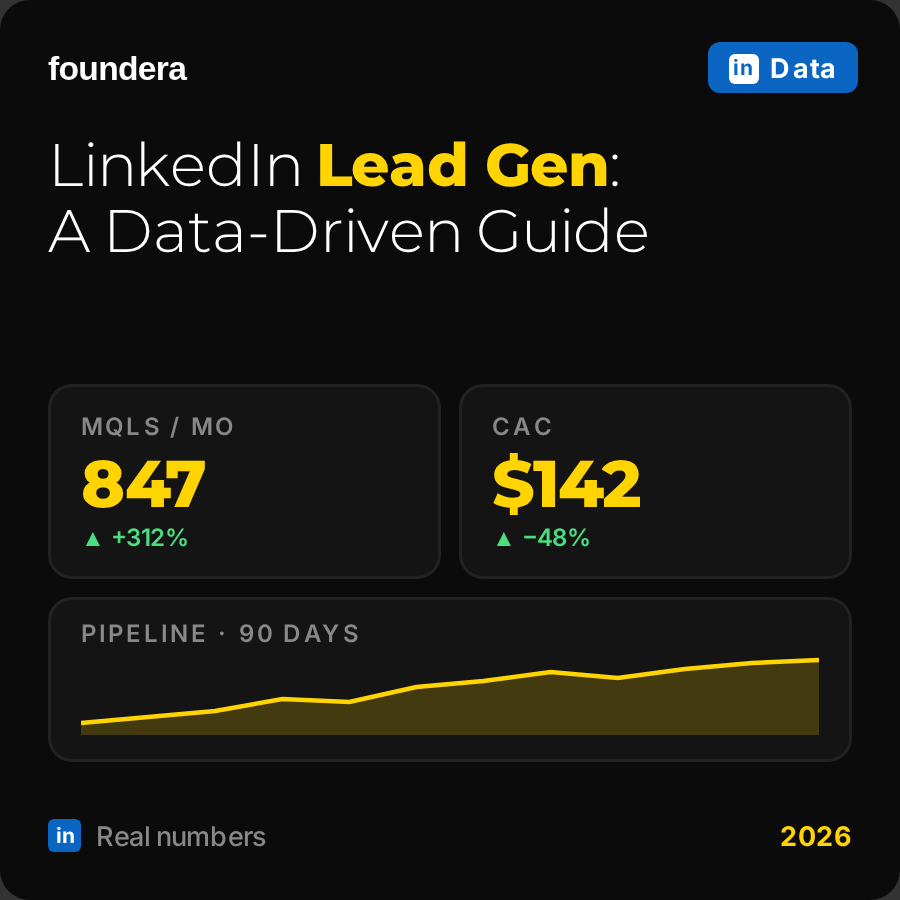
- Profile views from your ICP up 50%+ versus baseline (track via LinkedIn analytics).
- Inbound DMs from buyers or investors referencing your content (track in CRM with a
source: ceo_linkedinfield). - Reduction in cold-outreach response time for your sales team because the prospect already knows the CEO.
- Hires citing a specific post in their interview.
If you see signal on three of those four, the framework is working. If you only see likes going up, the framework is leaking. Tune the voice or the cadence.
When to hire help
A solo CEO can run this framework only if writing is a thing they enjoy and protect time for. For everyone else, the framework needs a person attached to it: an in-house content lead, a fractional content director, or an agency.
The math: a CEO who bills out at $500/hour and spends 5 hours per week on LinkedIn is spending $130,000 of opportunity cost annually. A done-for-you agency that takes most of that time off the CEO's plate pays for itself if it generates one closed deal or one senior hire.
That's the model we run at Foundera for tech CEOs raising rounds, hiring, or entering new markets.
Frequently asked questions
What is executive thought leadership?
Executive thought leadership is the systematic public expression of a CEO's point of view on the problems their company exists to solve. It's built around a person, carries a specific POV, and compounds over time.
How is it different from content marketing?
Content marketing speaks for the brand and rarely names a person. Executive thought leadership is tied to a CEO's identity, runs in their voice, and is read because of who said it as much as what was said.
Can a CEO do this without writing themselves?
Yes, and most do. The CEO contributes ideas, observations, and approval. A ghostwriter or content lead handles drafting, formatting, and publishing. The voice profile and voice gate keep the output authentic.
How long until executive thought leadership pays off?
Signal in 90 days. Real deal-and-hire impact in 6-12 months. The framework compounds; year one results understate what year two delivers.
Is LinkedIn the right platform?
For B2B CEOs in 2026, yes. Twitter has fragmented and Substack works for written-heavy executives, but LinkedIn is where buyers, investors, and senior hires concentrate. Run there first.
What does it cost?
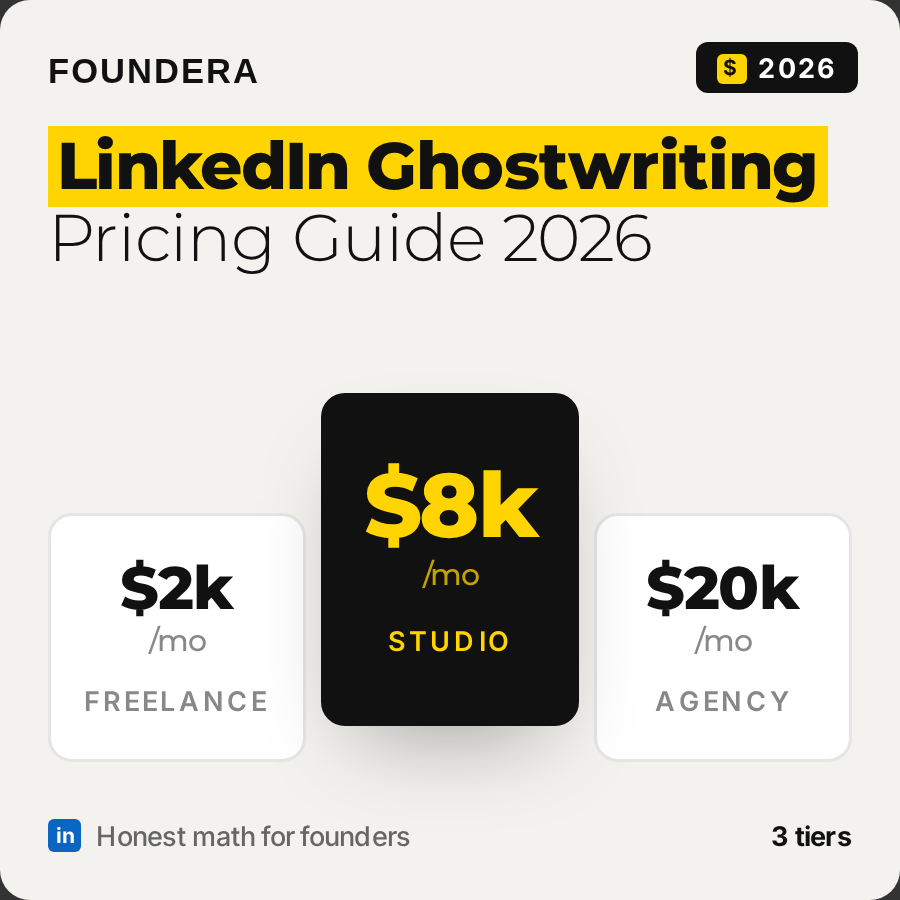
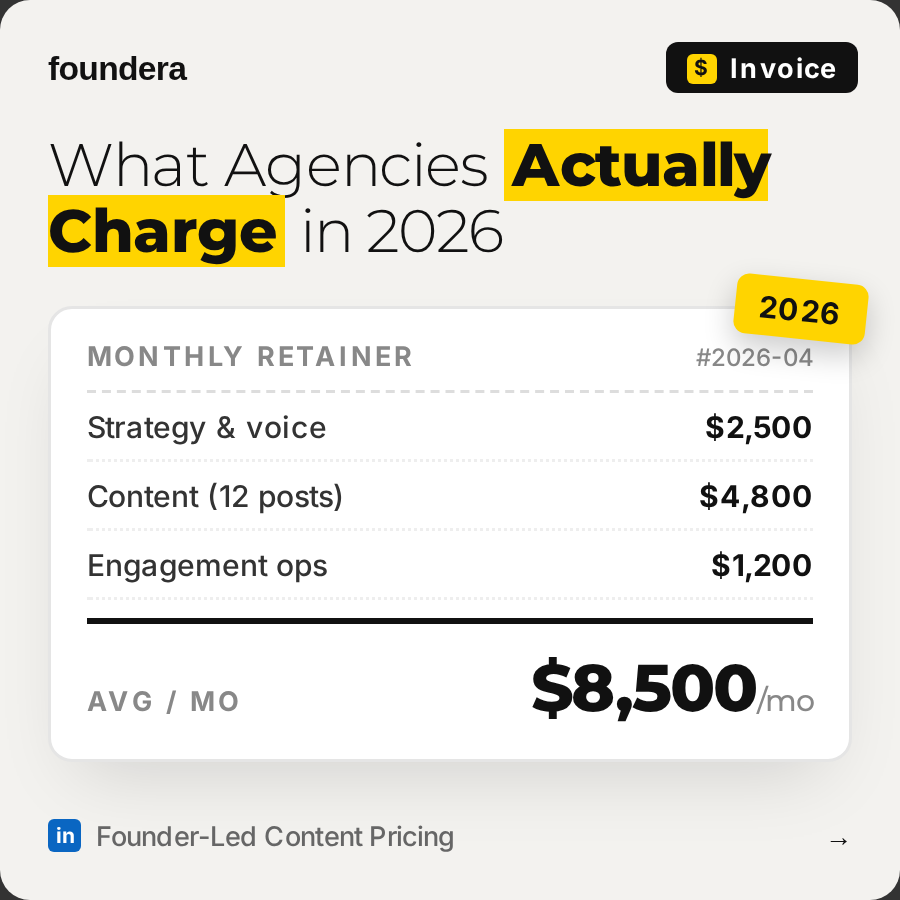
In-house content lead: $80-130K/year. Fractional content director: $4-8K/month. Done-for-you agency: $4-10K/month depending on scope. The right tier matches CEO time available, not budget alone.
How do I know if it's working?
Profile views from ICP, inbound DMs referencing posts, sales-cycle compression on warm leads, and hires citing a specific post. Three of those four moving in 90 days means the framework is healthy.
Your next step
If you have 20 minutes a week and you want this running by next month, the fastest path is to outsource the system. We built Foundera to do exactly this for tech CEOs whose time is the bottleneck. We write in your voice, we publish on your cadence, and our amplification network puts your posts in front of your target audience from hour one.
If you'd rather build this in-house, the pillars are the same. Start with the voice profile, then the idea engine, then cadence. Add the voice gate before you publish a single post or the whole thing drifts.
What the framework looks like by founder type
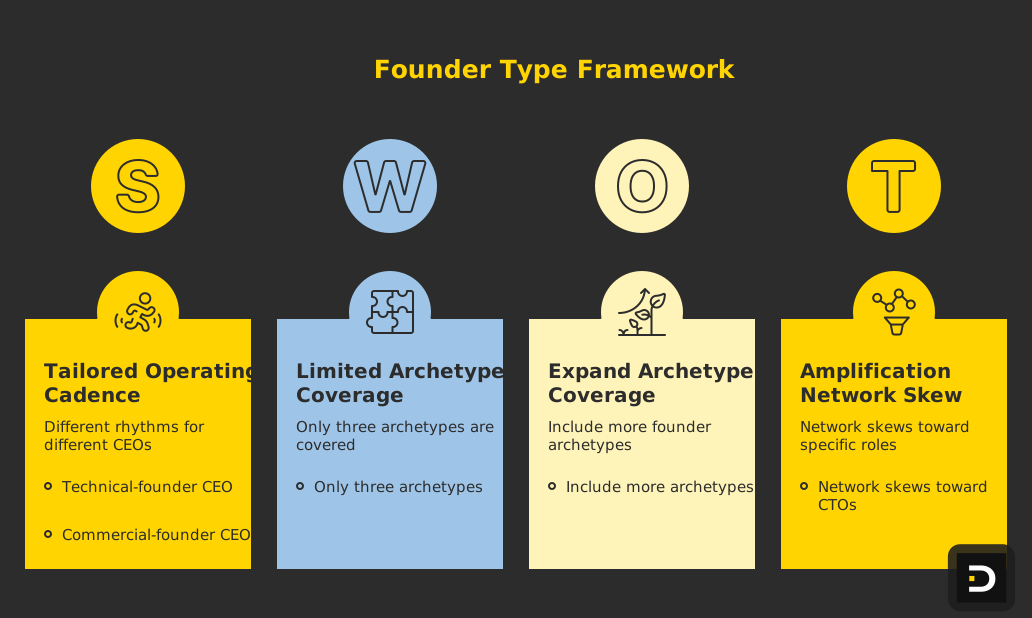
Not every CEO needs the same operating cadence. Three founder archetypes we work with at Foundera, each with a different rhythm:
The technical-founder CEO. Engineer-turned-CEO who used to write code daily. The voice profile is technical, the content pillars are mostly product architecture decisions and team-building lessons. Cadence: two posts per week, deep technical content. Sample header: "Why we rebuilt our auth layer three times." The amplification network for this archetype skews toward CTOs and platform engineers at peer companies.
The commercial-founder CEO. Sales or product-marketing background, now leading a B2B SaaS. The voice is sharper, opinion-forward, less technical. Pillars: GTM motion, competitive positioning, sales narrative. Cadence: three posts per week including a Friday "what I learned this week" pattern. Amplification network includes other founder-CEOs and VPs of Marketing.
The scale-up CEO. Post-Series-B, hired in to grow a company someone else founded. The voice profile blends operational maturity with curiosity. Pillars: scaling, hiring senior leaders, navigating boards. Cadence: lower volume, higher polish - one to two posts per week with longer-form essays. Amplification network skews enterprise.
Mismatching the archetype to the cadence is the single most common reason executive thought leadership stalls. A technical founder forced into a commercial-founder schedule will burn out by week six.
What to do in week one
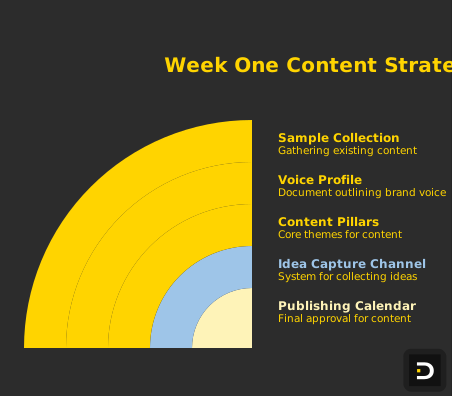
If you're starting from zero, the first seven days are about inputs, not outputs:
- Day 1-2: Voice interview (90 minutes with a writer who understands your category)
- Day 3: Sample collection - pull 20 of your existing internal docs, emails, board memos
- Day 4: Draft a voice profile (5-10 pages)
- Day 5: Pick three content pillars
- Day 6: Set up the idea capture channel (Slack DM-to-self or weekly voice memo slot)
- Day 7: Approve the publishing calendar for the next 30 days
Week two starts publishing. The cadence holds because the system was built first.
Real CEO examples by industry
Three executive thought leadership accounts we've watched evolve, each in a different category:
Cybersecurity CEO (Series A). Started with zero presence in March. By December, 12K followers, three speaking invitations, 8 inbound enterprise conversations. The voice: technical, occasionally contrarian on "best practices" the security industry hadn't questioned in years. Content pillars: agent security architecture, incident response patterns, vendor consolidation tradeoffs. Cadence: two posts per week, never missed. One post about a real customer outage went semi-viral and brought 400 followers in 48 hours.
AI infrastructure CEO (Series B). Started with 2K followers from prior career, mostly inactive. Reactivated in May with focused POV on context window optimization in production agents. By December, 28K followers, 4 podcast appearances, recruited two senior engineers who cited specific posts in their interview process. Content pillars: production AI patterns, technical mistakes the industry repeats, hiring philosophy. Voice: blunt, technically dense, occasionally funny.
B2B SaaS CEO (Series C scale-up). Already had a 50K-follower account from her prior company but no clear POV. Reset in February with a tight focus on customer-success operations. By December, the account became the reference point for the entire CS function in mid-market B2B. Three CS leaders applied for VP roles citing her posts. Voice: warm, system-thinking, lots of frameworks.
Pattern across all three: the cadence and POV mattered more than the volume of words. The CEOs who stuck to two pillars for 9+ months outperformed CEOs who jumped between five topics.
A 30-60-90 day rollout calendar
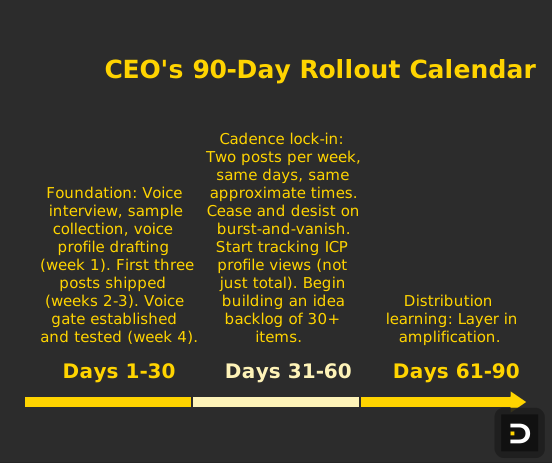
For a CEO starting from zero, here's the rhythm that consistently works:
Days 1-30: Foundation. Voice interview, sample collection, voice profile drafting (week 1). First three posts shipped (weeks 2-3). Voice gate established and tested (week 4). Don't optimize for engagement yet. Optimize for voice consistency.
Days 31-60: Cadence lock-in. Two posts per week, same days, same approximate times. Cease and desist on burst-and-vanish. Start tracking ICP profile views (not just total). Begin building an idea backlog of 30+ items.
Days 61-90: Distribution learning. Layer in amplification: a network of 10-20 real operators who engage your first hour of posting. Track which post formats land in your ICP versus which get vanity likes. Drop formats that get vanity, double down on formats that get ICP signal.
After day 90, the work shifts from setup to sustaining. The CEO who treats day 91 differently than day 89 doesn't build a compounding system. The CEO who continues the same boring rhythm for 18 more months ends up with category authority.
How to handle the inevitable burnout moment
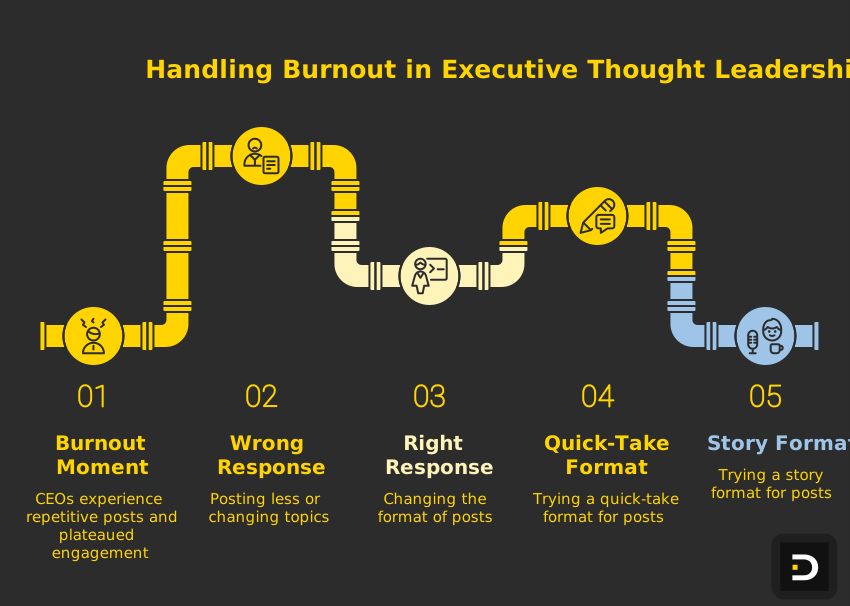
Around month four of executive thought leadership, every CEO hits the same wall: posts feel repetitive, engagement plateaus, the question "is this working?" gets loud. This is normal and predictable.
The wrong response: post less or change topics. Both kill the compounding curve.
The right response: change the format, not the topic. If you've been writing prose posts, try a quick-take format ("here's what I noticed this week"). If you've been writing frameworks, try a story format ("here's a customer conversation that surprised me"). The underlying POV stays the same. The wrapper changes.
The CEOs who survive month four are the ones who keep the cadence while varying the surface. The ones who quit are the ones who interpret a plateau as failure.
Reminder for the wall moment: signal in 90 days is the floor, not the ceiling. Real business results come in months 6-12. The plateau is the data telling you the system is working - keep going.
The two-year horizon
Most CEOs evaluate executive thought leadership at six months and judge whether it was worth it. Two-year horizon is the right frame. Year one builds the system and the audience. Year two compounds. The CEOs who walked away at month eight because results "weren't there yet" missed the entire second curve, which is where the asymmetric upside lives.
The TL;DR
Quick answer
Executive thought leadership is the systematic public expression of a CEO's POV on the problems their company exists to solve. In 2026 it runs on a 4-pillar framework: voice profile, idea engine, publishing cadence, voice gate. Built right, it costs the CEO 20 minutes a week.
Key takeaways
- Burst-and-vanish posting kills the compound. Two posts per week on tight days beats five sporadic ones.
- The voice profile is the input to every post. Without it, drafts drift to generic AI tone within 30 days.
- Pillar 4 (the voice gate) is non-negotiable. One person decides if a draft sounds like the CEO before it ships.
- Signal in 90 days. Real deal/hire impact in 6-12 months. Year two compounds dramatically.
- Track inbound DMs from ICP, not likes. Likes are vanity; DMs from buyers are pipeline.