
Most "thought leadership content" published in 2026 is content marketing wearing a costume. It has the CEO's headshot, an authoritative tone, and zero opinions anyone could disagree with. That's not thought leadership. That's a press release that took a screenwriting class.
Real thought leadership content does something specific: it stakes a position the market hasn't fully accepted yet, backs it with first-hand experience, and invites pushback. The founders and CEOs who do this well build authority compounds. The ones who don't post safe content forever and wonder why nobody remembers what they said.
This is the 2026 guide to building thought leadership content as a founder, with frameworks, examples from B2B SaaS and deep-tech, and the honest test for whether your content actually counts.
What thought leadership content actually means
Thought leadership content is the systematic publication of original perspectives on the problems your company exists to solve, delivered with enough specificity and conviction that the market starts to associate the position with you.
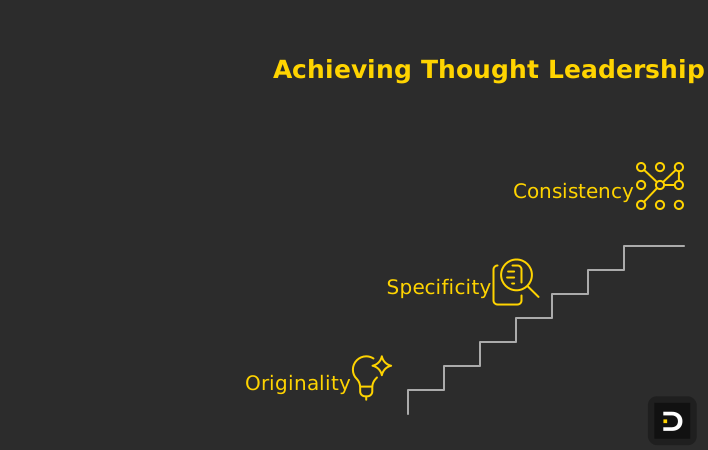
Three things have to be true:
- Originality. The position isn't already conventional wisdom in your category.
- Specificity. The post says something concrete enough that a competitor could write a counter-argument.
- Consistency. The author returns to related themes over time, building a recognizable POV.
If a post fails any of those three, it's content. Not thought leadership content.
What it is not: content marketing in a suit
Common mistakes that masquerade as thought leadership:
The "five tips" post. Generic advice with no defensible position. Thought leadership is "here's why most of the advice on X is wrong," not "here are five tips on X."
The case study with the CEO's face on it. A customer success story is marketing. The thought leadership version takes a position about why the pattern worked beyond this one customer.
The trending-topic reaction. Reposting commentary on a news story without an original take. If your post could have been written by anyone after reading the same headline, it's not thought leadership.
The polished brand essay. Long, well-formatted, full of footnotes, says nothing specific. Length and polish are not the same as originality.
The test: would your direct competitor read this and want to write a rebuttal? If not, it's safe content, not thought leadership.
The four pillars of real thought leadership content
We've watched what makes founder POV stick versus what evaporates. Four pillars consistently:
Pillar 1: A clearly stated position
Every post should have a one-sentence claim that fits inside a headline. "Cold outreach is dead for high-ACV B2B in 2026." "Most LinkedIn ghostwriting agencies damage founder brands." If the claim is too vague to disagree with, the post is too vague to be thought leadership.
Pillar 2: First-hand evidence
The position has to come from something you actually saw or built, not something you read. "We ran cold outreach for nine months and here's what broke" beats "industry data shows cold outreach declining." Founders have a permanent advantage over commentators: they have actual experience.
Pillar 3: Specific implications
A position without consequences is just an opinion. Spell out what changes if the audience accepts your claim. "If cold outreach is dead, your SDR budget should shift to..." The implication is what makes the post useful.
Pillar 4: Voice consistency
Across months of posts, your POV should be recognizable. A reader should be able to pick your post out of a feed without seeing your name. That recognition is what makes thought leadership compound.
Formats that work for founders in 2026
Not every format is right for every founder. These five carry the most signal:
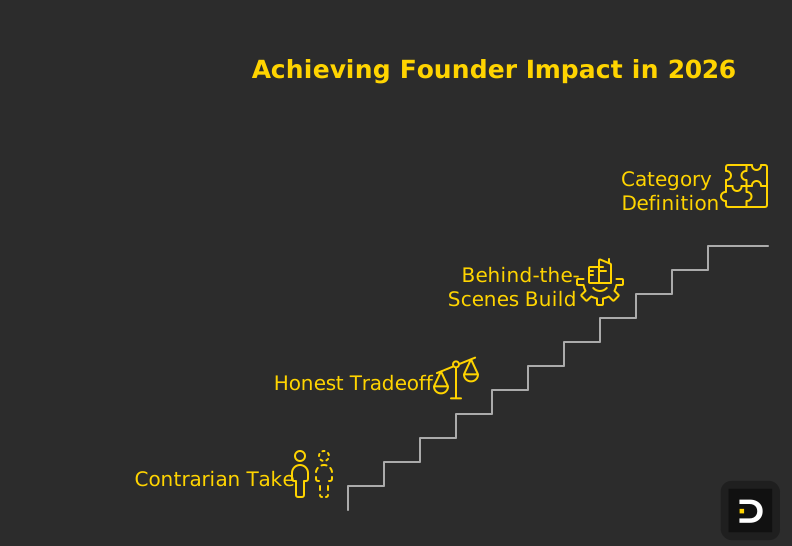
The contrarian take. "Here's what everyone says about X. Here's why they're wrong." High risk, high reward. Use sparingly to avoid sounding cranky.
The honest tradeoff. "Most people frame X as a choice between A and B. The real choice is A vs B vs C, and C wins because..." Demonstrates clearer thinking than the market.
The behind-the-scenes build. "Here's how we actually built feature X. Here's what we tried first that didn't work." Vulnerability and specificity make this format magnetic.
The category-defining frame. "Here's the way our category usually gets described. Here's a better way." Position yourself as the person who named the thing.
The pattern observation. "Across the last 12 customer conversations, here's the pattern we keep seeing." Founder pattern-recognition is uniquely valuable.
These formats hit the four pillars and feel native to LinkedIn.
Real examples from B2B SaaS, deep-tech, and cybersecurity
B2B SaaS example (contrarian): "Net Revenue Retention is the most misleading number in SaaS. Here's what investors should ask instead, and why we changed how we report it internally." Stakes a position. Has first-hand evidence. Implies a specific change.
Cybersecurity example (behind-the-scenes): "We rebuilt our anomaly detection from rules-based to LLM-based in Q1. Here's what worked, what failed, and the architecture decisions that mattered." Specific, technical, defensible. Other cybersecurity founders save it.
Deep-tech example (category-defining): "Everyone calls what we do 'agent security.' We think the right frame is 'identity-aware runtime.' Here's why the naming matters for buyers." Names a category and explains the implication.
AI startup example (pattern observation): "Across 47 enterprise AI deployments in 2026, the deciding factor wasn't model quality. It was how the company handled context windows in their orchestration layer. Here's what the winners did differently." Founder-grade insight.
All four examples are recognizably from a specific person. None could have been written by a generic content team.
How to build it without writing every post yourself
Most CEOs can't sustain weekly thought leadership content writing alone. The realistic system has three parts:
The CEO contributes: ideas, observations, opinions, customer anecdotes, technical insights. 20-30 minutes per week of voice memos or Slack messages.
A writer (in-house or agency) drafts: turning the CEO's raw material into posts in the CEO's voice. 5-10 hours per week.
An editor or voice gate: ensures every draft sounds like the CEO before it ships. Catches AI-tells, generic phrasing, and missed POV moments. 2-3 hours per week.
The CEO time investment is small. The system around them does the lifting. The output is consistent thought leadership content under the CEO's name that the CEO would have written themselves if they had the time.
How to measure thought leadership content ROI
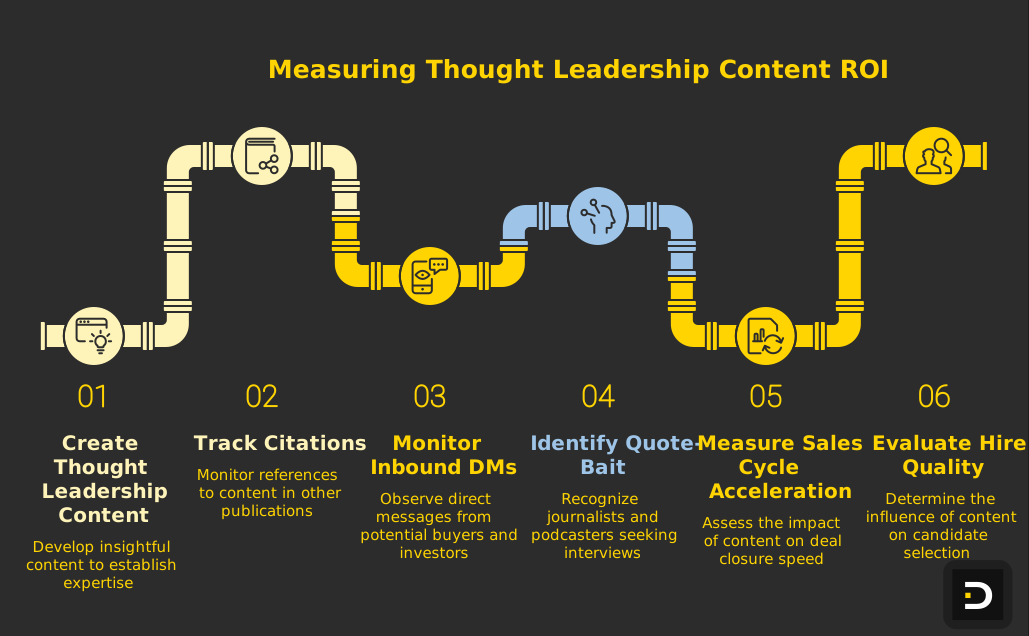
Don't track likes. Track:
- Citations. Other people referencing your POV in their own posts or articles.
- Inbound DMs. Buyers, hires, and investors reaching out with specific references to your content.
- Quote-bait. Journalists or podcasters reaching out to interview you.
- Sales cycle acceleration. Deals closing faster because prospects already know your POV.
- Hire quality. Senior candidates citing a specific post in their interview.
Likes are vanity. Citations and inbound are signal. Track the right thing.
Common mistakes that kill thought leadership content
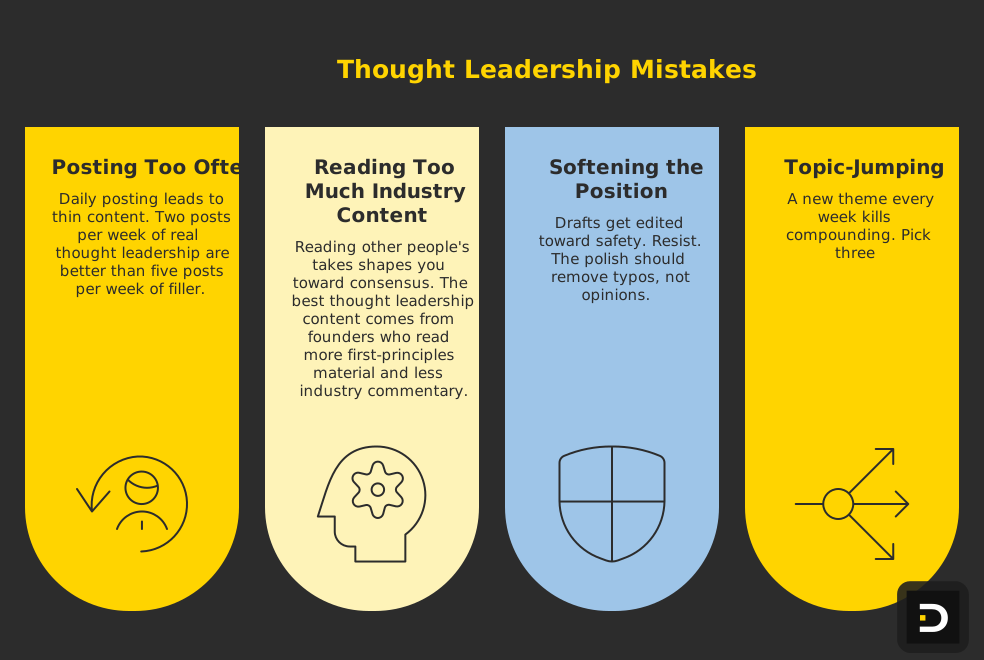
Mistake 1: Posting too often. Daily posting forces you to write thin content. Two posts per week of real thought leadership beats five posts per week of filler.
Mistake 2: Reading too much industry content. Reading other people's takes shapes you toward consensus. The best thought leadership content comes from founders who read more first-principles material and less industry commentary.
Mistake 3: Softening the position. Drafts get edited toward safety. Resist. The polish should remove typos, not opinions.
Mistake 4: Topic-jumping. A new theme every week kills compounding. Pick three or four pillars and return to them for years.
Mistake 5: Outsourcing the POV. A ghostwriter can draft your voice but can't invent your position. If you outsource the POV, the content becomes generic within a month.
Frequently asked questions
What is thought leadership content in 2026?
It's the systematic publication of original positions on the problems your company solves, backed by first-hand experience and delivered with enough specificity that a competitor could write a counter-argument.
How is thought leadership content different from blog posts?
Most blog posts are content marketing for the brand. Thought leadership content is tied to a specific person, carries an original POV, and compounds in authority over time.
Can a founder do thought leadership content without writing themselves?
Yes, if the founder contributes ideas, observations, and opinions, and a writer handles drafting. The POV must come from the founder; the prose can be drafted by someone else.
How often should a founder publish thought leadership content?
Two posts per week is the sweet spot. Less than that and you stop compounding. More than that and quality drops.
What's the best platform for thought leadership content in 2026?
LinkedIn for B2B. Substack for written-long-form CEOs. Twitter/X has fragmented and only works in narrow communities. Pick one platform and dominate it before adding others.
How long until thought leadership content drives business results?
Signal in 90 days. Real outcomes (inbound deals, hires citing posts, journalist interest) in 6-12 months. The compound curve makes year two materially better than year one.
What's the biggest mistake founders make with thought leadership content?
Softening positions until the content says nothing. The whole value is in the specific opinion. Polish removes typos, not the POV.
Your next move
If you're not yet publishing weekly, start by writing down your three strongest opinions about your category. The ones that get you arguing with people at dinner. Those are your content pillars. Build a publishing system around them. We do this for tech CEOs at Foundera, but the framework above is yours to use whether you work with us or build it in-house.
Building the POV before you build the content
Most founders try to develop thought leadership content from the inside-out: pick a topic, write the post, hope a POV emerges. That's backwards. The POV has to exist before the first post.
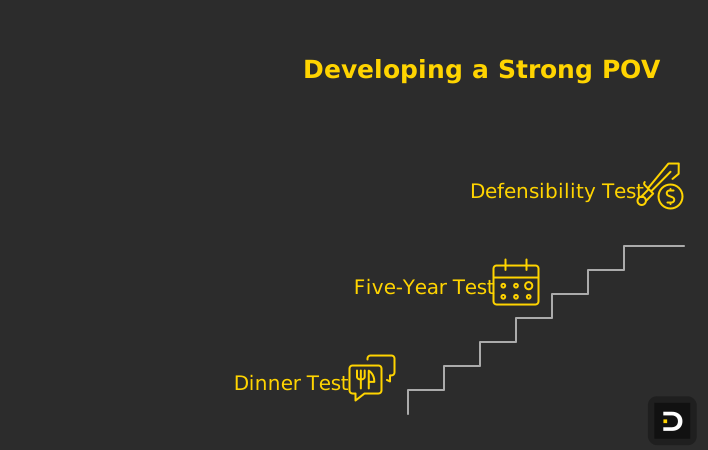
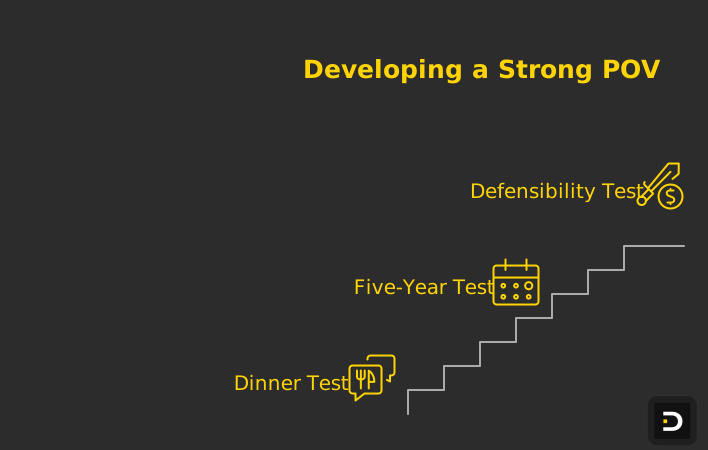
A workable POV passes three tests:
The dinner test. Could you state your POV at a dinner with peers in your category and start an argument? If everyone nods, it's not a POV - it's consensus.
The five-year test. Will the position you're staking hold up in five years, or is it tied to a passing trend? If it's a trend take, you'll be embarrassed by it within 18 months.
The defensibility test. Could you defend your position against three smart counter-arguments? If you can't, your POV is half-formed. Find the holes, plug them, then publish.
Run your three core positions through these tests before turning them into content pillars. A POV that fails any of the three becomes either a single post (one-off) or a deleted draft.
What the compounding curve looks like
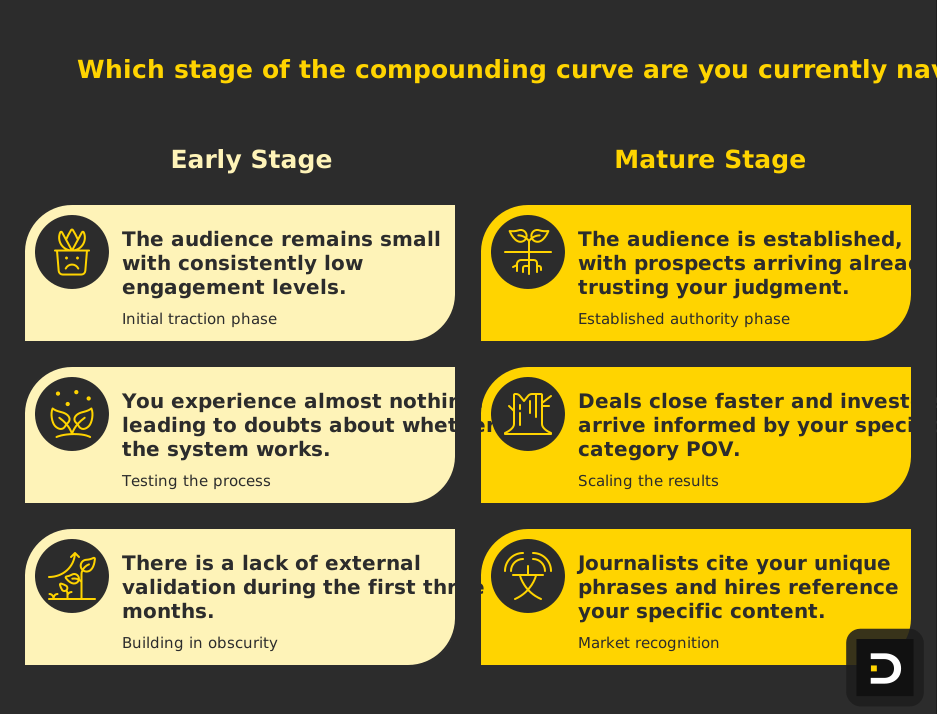
Thought leadership content compounds slowly, then suddenly. The honest timeline:
Months 1-3: Almost nothing. You're shipping consistently but the audience is small. Engagement is low. You start to question whether the system works.
Months 4-6: The first real signals. Inbound DMs from people you've never met. A journalist mentions a phrase you've been using.
Months 7-12: The slope steepens. Hires reference specific posts. Investors come to first calls knowing your category POV. Deals close faster because prospects already trust your judgment.
Year 2: Compound takes over. Posts you wrote 9 months ago are still generating inbound. New posts ride the credibility of old ones. You stop being "a founder who posts" and become "the founder who owns the X conversation."
The founders who quit at month 4 because results "aren't there yet" miss the entire compounding curve. The math only works for people who run it for 18 months minimum.
Distribution mechanics: what happens in the first hour
The most important hour for any thought leadership post is the first one after it ships. LinkedIn's algorithm decides reach based on early signals, and the decision happens fast.
What needs to happen in hour one:
Minute 0-15: Early engagement window. Five to ten relevant operators in your category engage authentically. Not pods, not bots - actual people whose engagement makes sense. The algorithm sees: "specific content category, engaged by specific category operators" and starts widening reach.
Minute 15-30: Profile views from second-degree connections. As reach widens, profile views from people you don't follow start coming in. This signals "valuable to non-followers" to the algorithm.
Minute 30-60: Comments with substance. Long comments (more than two sentences) signal higher value than likes. Two or three substantive comments in this window dramatically boost reach.
Hour 1-2: The reach decision. By two hours in, LinkedIn has decided whether to push the post broadly or contain it. The decision is largely irreversible.
The CEOs whose posts go semi-viral aren't lucky. They have the first-hour mechanics dialed.
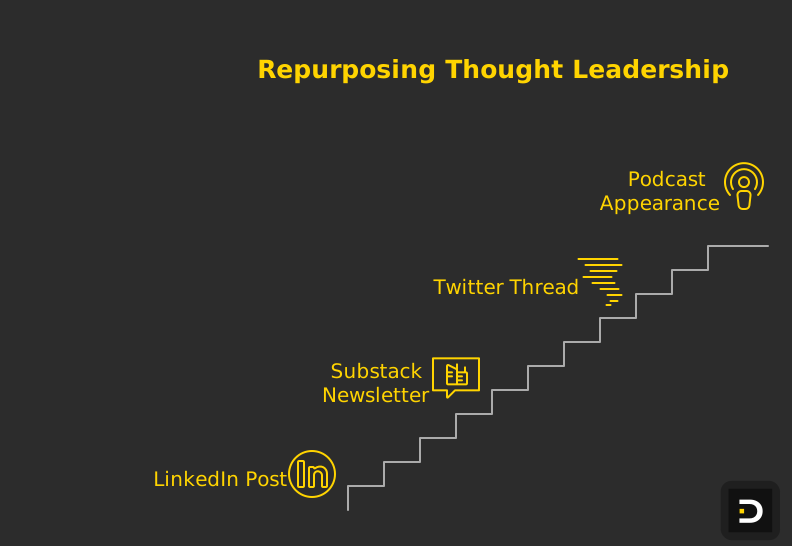
Repurposing one piece across three platforms
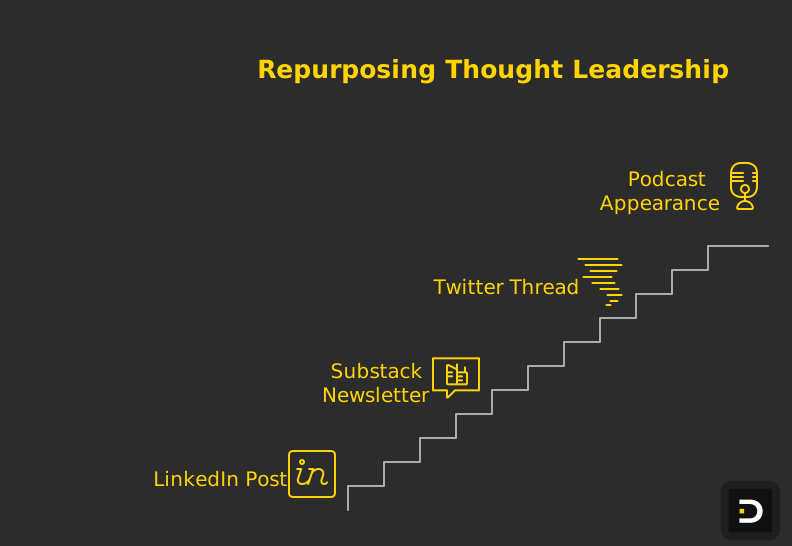
A single strong thought leadership piece should generate three to four pieces of derivative content across other channels. Repurposing math:
LinkedIn post (the source). Your two-paragraph POV on a topic.
Substack newsletter (10x deeper). Take the same POV and expand into 1,500 words with examples, counter-arguments, and a stronger conclusion. Same insight, longer treatment.
Twitter thread (5x more punchy). Strip your LinkedIn post to its sharpest sentences, 8-12 tweets, each tweet a punch. Different audience, same POV.
Podcast appearance. Mention the topic on a podcast guesting. The podcast audience hears your POV and hunts for the original written version.
The single insight generates four pieces of distribution. Done weekly, this means your one weekly idea reaches four different audiences without four times the work.
The founders who skip repurposing are leaving compound interest on the table. The ones who repurpose ruthlessly are the ones who build category authority faster than their cadence alone would justify.
How thought leadership compounds across hiring, sales, and fundraising
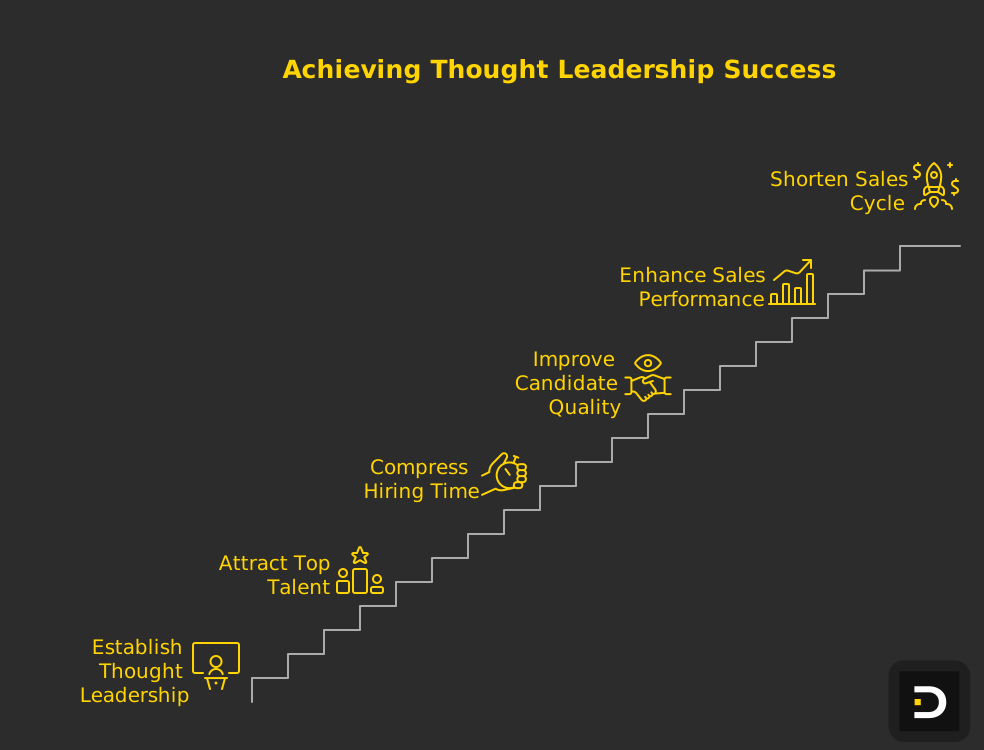
Most founders think of thought leadership as a marketing channel. The CEOs who run it for 18+ months realize it's three channels collapsed into one.
Hiring channel. Senior candidates self-select into companies whose CEO posts they respect. By month 12, your inbound recruiting pipeline starts to skew toward people who already understand your category POV. Time-to-hire compresses. Reference-check signal improves. The hires that come this way ramp faster.
Sales channel. Prospects who buy from category authority figures need less convincing. The deal cycle compresses 30-60%. Discounts shrink because the prospect isn't negotiating from a position of "convince me you're real." They already decided that from your content.
Fundraising channel. Investors who follow your category POV come to first calls warm. Your fundraise process shortens. Term sheets arrive with less friction. The investor partner who saved seven of your posts before the meeting is the one who advocates internally on your behalf.
The CEO who treats thought leadership as just marketing under-prices the channel by 3x. The CEO who treats it as hiring + sales + fundraising compounded prices it correctly.
The asymmetric bet
Most CEOs won't sustain thought leadership for 18 months. Most will quit between month four and month nine. This is precisely why the ones who do sustain it earn asymmetric returns - the field stays sparsely populated by patient operators. The economic moat is patience, not talent.
One sentence to take away
Thought leadership content is the slow, patient construction of a position the market eventually adopts as conventional wisdom. The founders who win played the long game while their competitors chased viral moments and burned out.
The TL;DR
Quick answer
Real thought leadership content stakes a position the market hasn't fully accepted, backs it with first-hand experience, and invites pushback. The 4-pillar framework: clearly stated position, first-hand evidence, specific implications, voice consistency. If your direct competitor wouldn't want to write a rebuttal, it's content marketing, not thought leadership.
Key takeaways
- If the post could have been written by anyone after reading the same headline, it's not thought leadership.
- The contrarian take, honest tradeoff, behind-the-scenes build, category-defining frame, and pattern observation are the 5 formats that work.
- Topic-jumping kills the compound. Pick 3-4 pillars and return to them for years.
- Track citations, inbound DMs, quote-bait from journalists, and sales cycle acceleration. Likes are vanity.
- Most CEOs quit between month 4 and 9. The ones who run it for 18+ months earn asymmetric returns.