Executive LinkedIn Content Strategy for 2026: The Complete Playbook
LinkedIn has changed. The 2026 playbook is nothing like 2023. Carousels don't auto-win. Personal posts with video attached beat generic text. Consistency matters more than virality.
If you're an executive trying to build thought leadership on LinkedIn, you need a strategy that works now—not what worked last year, and definitely not what works for 19-year-olds on TikTok.
This guide covers the 2026 framework: what content mix actually performs, how often to post, how to build engagement without chasing algorithms, and how to measure what matters.
Table of Contents
- What Changed in 2026: The New LinkedIn Landscape
- The Content Pillar Framework
- Content Mix: Text, Video, Carousels, and Documents
- Posting Frequency and Cadence
- The 30/60/90 Day Plan
- Building Real Engagement (Not Vanity Metrics)
- Metrics That Actually Matter
- FAQ: Strategy Questions
What Changed in 2026: The New LinkedIn Landscape
Three big shifts happened on LinkedIn between 2024 and early 2026.
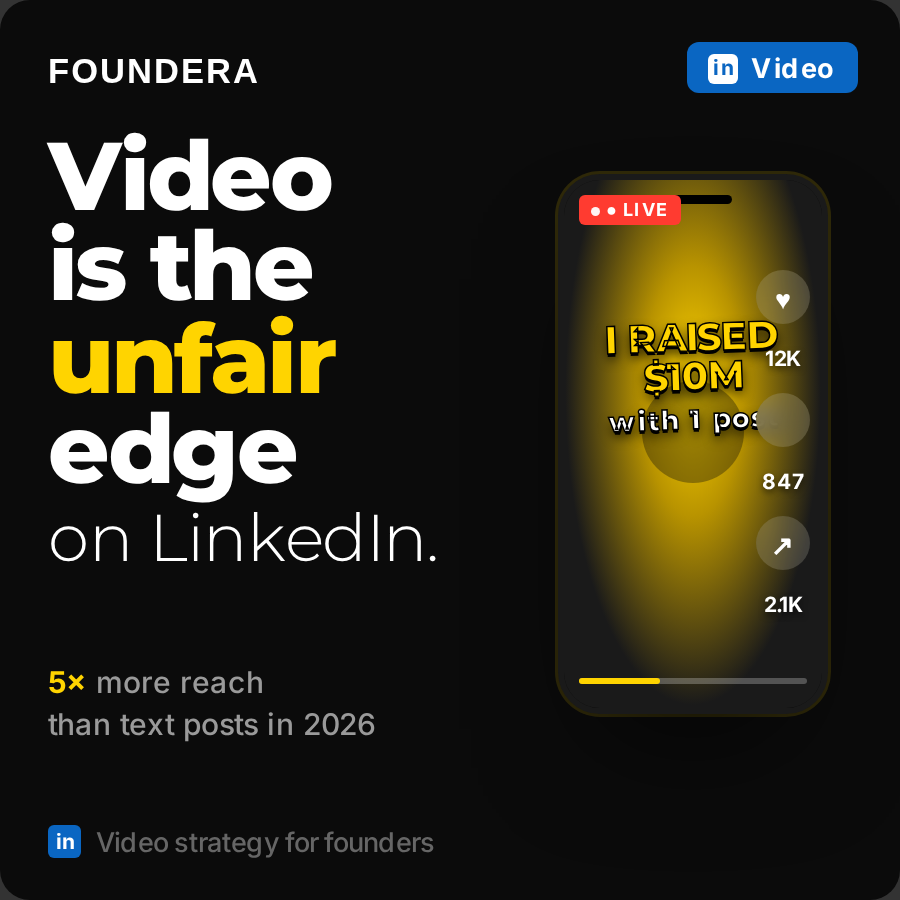
First, video won. LinkedIn's algorithm now heavily favors native video—not YouTube links, native video uploaded directly to the platform. A 60-second video of you talking beats a carousel of stock photos. The algorithm is designed to keep people on LinkedIn, not send them elsewhere. If you upload a video natively, LinkedIn rewards you. If you link to a YouTube video, LinkedIn deprioritizes it.
This is bad news for production teams that built carousels as their main content type. It's good news for founders who are willing to go on camera briefly and be a little imperfect.
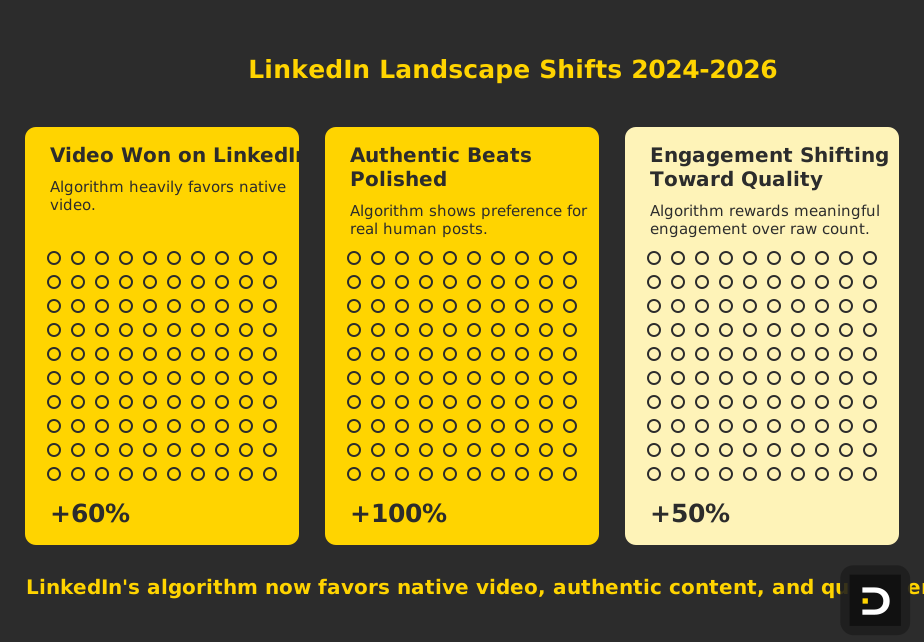
Second, authentic beats polished. In 2024, the winning LinkedIn posts often looked corporate and edited. In 2026, the algorithm is showing preference for posts that feel like they came from a real human. Typos don't hurt you. A phone-recorded video beats a perfectly shot reel. The signal matters more than the package.
This doesn't mean "post anything badly." It means: natural and thoughtful beats overproduced and empty.
Third, engagement is shifting toward quality. LinkedIn's algorithm used to reward raw comment count. Now it's shifting toward meaningful engagement—conversations that are substantive, disagreement, debate. A post with 100 thoughtful comments outperforms a post with 500 generic "Great perspective!" comments.
This means your engagement strategy is no longer "ask a question and hope for comments." It's "say something specific enough that smart people disagree with you."
The Content Pillar Framework
Your content pillars are the 4–6 themes you'll return to repeatedly, month after month. They're not one-off topics. They're the core of what you believe and what you want to be known for.
Here's how to identify them.
Step 1: Audit your existing knowledge. What are the five ideas you keep coming back to in conversations? What do your founders, customers, and team members ask you about most? What do you think the industry gets wrong?
Step 2: Narrow to 4–6 pillars. Don't pick 12. You won't be consistent. Pick the themes that are genuinely core to your perspective. For a cybersecurity CEO, this might be: "Modern threat landscapes," "Engineering resilience into products," "Founder mental health," and "The future of zero-trust."
Step 3: Assign different post types to each pillar. Some pillars work better as text posts. Others as videos. Some as documents. When you map pillar to format, your content creation becomes systematic.
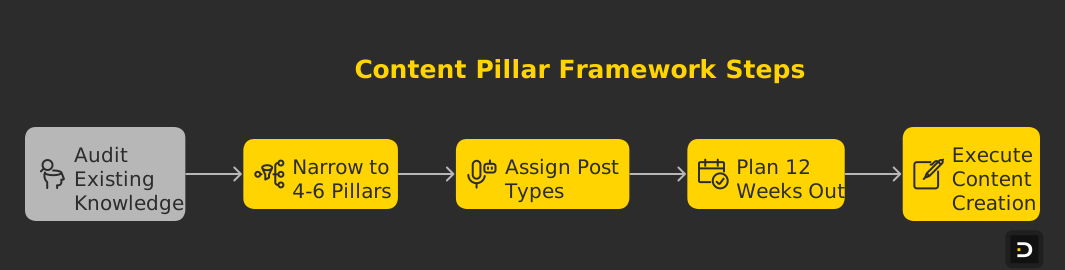
Step 4: Plan 12 weeks out. For the next 12 weeks, map which pillar you'll touch each week. You don't need a detailed outline, just: "Week of April 21: Threat landscapes + text post." This ensures you're balancing across pillars and not obsessing over one theme.
Example pillar map for a SaaS CEO:
Pillar 1: Engineering-first go-to-market (videos + some text)—the idea that great products sell themselves if built right. This pillar works well as quick videos where you explain a decision or principle.
Pillar 2: Technical debt and shipping speed (text posts)—how to balance long-term code health with fast iteration. Better as longer text posts where you can walk through a specific framework.
Pillar 3: Founder mental health (long-form text + documents)—the challenges of scaling, burnout, and how to stay sane. This pillar works as 800+ word posts and as linked documents where you can share frameworks.
Pillar 4: Hiring and building teams (videos + text)—how to hire for culture fit and growth. Can be videos of you explaining hiring philosophy, or text posts about specific hiring mistakes.
Once you lock your pillars, content creation becomes a system. You're not asking "what should I post?" every week. You're asking "which pillar am I focusing on this week, and what's the best format?"
Content Mix: Text, Video, Carousels, and Documents
In 2026, the winning mix on LinkedIn breaks down like this:
Native video: 40% of your posts. This is the dominant format now. It's 30–120 seconds, usually you on camera, talking about an idea, a decision, or a mistake. You don't need a ring light or a teleprompter. Imperfection is fine.
Examples of native video that works: you at your desk saying "We made a hiring mistake and here's what we learned." You walking through your office explaining "Why we're rebuilt our entire backend in Q2." You visibly thinking through a hard problem.
Video is the highest-reach format on LinkedIn in 2026. If you post 4 times a week, 1–2 should be native video.
Text posts: 35% of your posts. These are posts where your main content is words—not a carousel, not a doc link. A classic "observation + thought + call to action" post. These work best when they're personal, specific, and genuine.
Good text posts: a story about a customer call that changed your thinking. An unpopular opinion about your industry. A framework you've been testing. A mistake you made and what it taught you.
Text posts are winning again because they can be written casually and published instantly. No design needed. No waiting for a designer.
Carousels: 15% of your posts. Carousels (multi-slide images) are no longer the dominant format, but they still work in specific cases: when you want to present a numbered list, a comparison table, a before/after, or a step-by-step guide.
The rule: only use carousels if they genuinely serve the content. Don't make a carousel just because "carousels perform well." In 2026, a lazy carousel underperforms a thoughtful text post.
Linked documents or long-form pieces: 10% of your posts. LinkedIn's document feature lets you upload PDFs or publish long-form articles directly. These work for: detailed frameworks, research you've done, case studies, or deep dives on a specific topic.
Example: "We spent three months studying our top 50 customers' retention patterns. Here's what we found." That deserves a long-form document, not a carousel.
The mix is guidelines, not rules. Some weeks you'll post 5 times and need 2 videos. Other weeks, your main post is a text observation with a video reply. Adapt to what fits the idea.
Posting Frequency and Cadence
How often should you post?
The research says 1–2 posts per week is sustainable and drives measurable results. This is different from "post every single day" which burns out most executives and often produces low-quality content.
One post per week: This is the minimum viable frequency. It's enough to show up consistently in people's feeds, build followers, and develop a voice. It takes about 2–3 hours per week when you include planning, writing, feedback, and engagement.
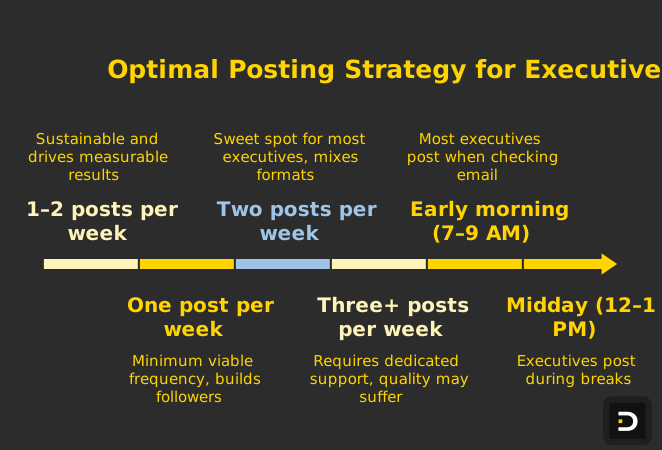
Two posts per week: This is the sweet spot for most executives. You're touching 2 different pillars, mixing formats (maybe one video, one text), and staying visible without overdoing it. This is about 4–5 hours per week.
Three+ posts per week: This works if you have dedicated content support or a ghostwriter handling the mechanics. Beyond 2x/week, quality often suffers because you're either rushing or cannibalizing your own reach (your new post buries your previous one).
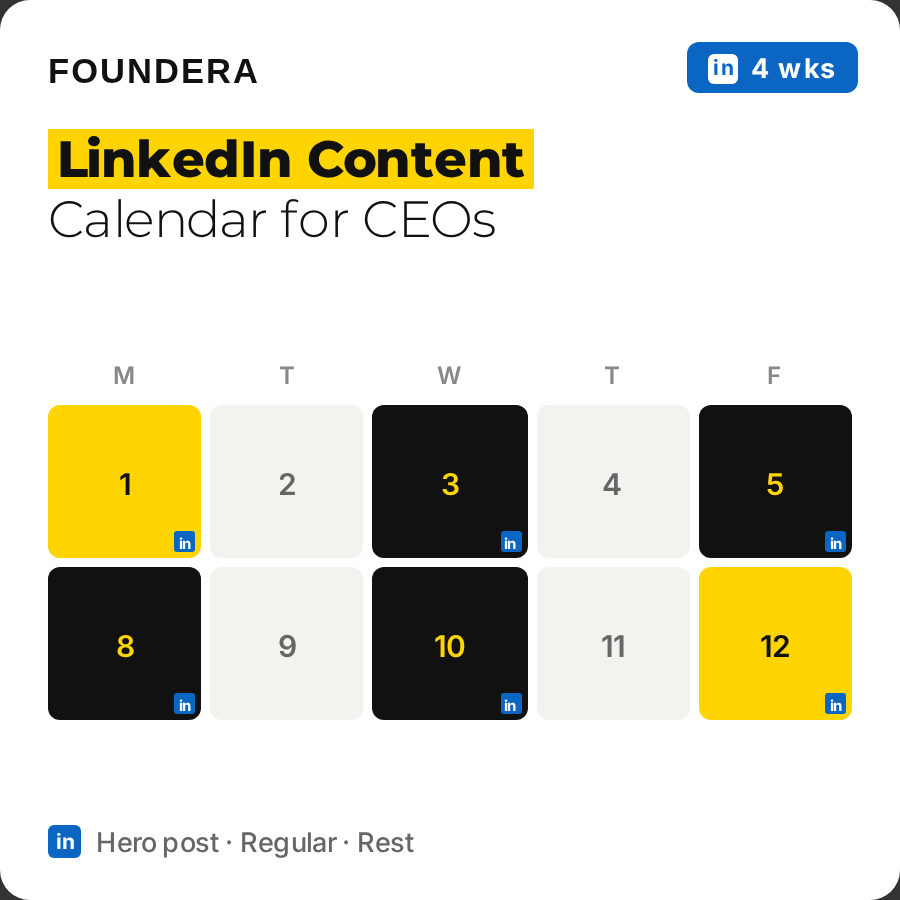
Cadence matters more than frequency. Posting Monday, Wednesday, Friday at 9 AM (in your timezone) is better than random posting. Your audience learns when to expect you. LinkedIn's algorithm rewards consistency.
Most executives post early morning (7–9 AM) when people are checking email, or midday (12–1 PM) when they're taking a break. Avoid late evening unless your audience is mostly US-based night owls.
If you can't post every single day at the same time, weekly is fine. Consistency beats frequency.
The 30/60/90 Day Plan
Here's a framework for launching an executive content strategy:
Days 1–30: Foundation. You're establishing presence and consistency, not viral reach. Post 4 times (roughly weekly) on your 4 core pillars. Mix at least one video, 2–3 text posts. Engage with 20–30 posts from people in your network each day (like, comment thoughtfully, respond to comments on your posts). The goal is to show the algorithm that you're a real, active person, not a bot.
By day 30, you should have 4 posts up, 2 of which got 50+ comments. You don't need a viral hit. You need consistency and proof of life.

Days 31–60: Iteration. You're doubling down on what's working. Which of your first 4 posts got the best engagement? Which pillar resonated most? Lean into it. Double your engagement effort—if you're liking 20 posts/day, do 40. Comment longer, more thoughtfully.
Post 8 times over the next month (2x/week pace). Keep mixing formats. By day 60, you should have 12 posts total, and 3–4 of them should have 100+ comments or 500+ reactions.
Days 61–90: Amplification. You're building momentum and reputation. People are starting to recognize your voice. Focus on your highest-performing pillar, but keep rotating through all 4. Continue 2x/week posting. Spend 30 minutes a day on engagement with your network (people who regularly comment on your posts, people in your industry, potential customers).
By day 90, you should have 20+ posts with strong engagement, 500–2000 new followers (depending on starting size), 2–3x weekly profile views, and social proof that the content strategy is working.
This plan is sustainable because it doesn't require you to post daily. It requires consistency and strategic engagement, not vanity metrics.
Building Real Engagement (Not Vanity Metrics)
Not all engagement is equal. Here's the hierarchy:
Profile visits and follower growth are your baseline metric. These should be 3–5x higher than pre-content baseline after 60 days.
Reactions (likes) matter but are passive. Someone scrolling liked your post. It doesn't mean they read it or believed it.
Comments are the real signal. A comment means someone took time to write. Comments create conversation, and conversation signals trust and interest. A post with 100 comments is worth more than a post with 1,000 likes.
Mentions and shares are rare but valuable. Someone shared your post with their network or tagged you in a related conversation. This extends your reach and signals that your content has cross-network value.
DMs from prospects, partners, or journalists are conversion signals. When someone messages you saying "I read your post about X and we're experiencing the same problem," that's real impact.
How to build real engagement:
Reply to every comment on your posts in the first 24 hours. Not with "Thanks!" but with a real follow-up. If someone challenges your idea, engage with the disagreement. This signals that you're not running an ad campaign—you're having a conversation.
Share others' posts intentionally. Don't just repost everything. Share 3–5 other people's content per week with genuine commentary (not just "Great post!"). This builds reciprocal relationships and tells the algorithm you're part of the community, not talking at it.
Ask specific questions in your posts. "What's your biggest challenge in this area?" beats "What do you think?" The specificity invites thoughtful responses.
Do video replies to thoughtful comments. If someone makes a great point in the comments, record a 30-second video replying to them directly. This builds relationships and encourages others to engage thoughtfully.
Metrics That Actually Matter
Most executives track the wrong metrics. Here's what to actually measure:
Monthly follower growth rate. This should be 5–15% per month once you hit consistency (months 2+). In month 1 it might be lower. Consistent growth over 90 days signals that you're building real reach.
Average post impressions. LinkedIn tells you how many people saw each post. In month 1, expect 2K–10K impressions per post depending on your starting follower count. By month 3, this should be 10K–50K+. The growth trajectory matters more than the absolute number.

Engagement rate. This is (comments + reactions) / impressions. A 1% engagement rate is solid for an executive. 2%+ is very good. If your engagement rate is declining, the content isn't resonating or you're not engaging back.
Profile view growth. LinkedIn shows weekly profile views. This should 2–3x within 90 days of starting a consistent content strategy. Profile views are the closest proxy for "people considering you."
Inbound conversation volume. How many quality conversations started via LinkedIn? This is tracked via direct messages, inbound outreach that mentions your content, or sales asking "They found us via your LinkedIn posts." This is the only metric that directly connects to business outcomes.
Content pillar performance. Which pillar gets the most engagement? Double down on it. Which gets the least? Either deprioritize it or rethink how you're presenting it.
Don't track: total shares, total comments in isolation, or posts that hit "viral" (10K+ impressions). These are vanity metrics. Track growth, momentum, and business outcomes instead.
FAQ: Strategy Questions
Q: What if I don't like being on video?
A: Then focus on text posts and documents initially. 40% of your mix should be video long-term, but you can start with 0%. Over time, video will likely become your highest-performing format, and you'll want to experiment. But you don't need to start there if it's uncomfortable.
Q: How do I know which pillar to focus on first?
A: Pick the one that gets the most responses in conversations. If people keep asking you about "mental health in scaling," that's a pillar. If you're always explaining "how we think about security," that's a pillar. Pillars emerge from what people actually care about, not what you think they should care about.
Q: Can I repurpose my content across platforms?
A: Yes, but LinkedIn-first. A LinkedIn text post becomes a Twitter thread. A LinkedIn video becomes a TikTok. But don't start with Twitter and port to LinkedIn. LinkedIn is your home. Optimize for LinkedIn, then repurpose outward.
Q: How long until I see ROI?
A: 90 days minimum. Some executives see traction in 60 days. Some take 6 months. The biggest variable is how consistent you are and how good your ghostwriter or internal team is. ROI shows as: inbound conversations, increased credibility in your space, easier hiring, and eventually, customer acquisition tied to your thought leadership.
Q: Should I engage with competitors?
A: Yes, thoughtfully. If a competitor posts something insightful, engage authentically. If they post something wrong, you can disagree in the comments. This positions you as knowledgeable and confident. Don't ignore them; don't troll them. Engage like the expert you are.
Ready to Build Your Executive Thought Leadership Strategy?
A content strategy works only if it's consistent, specific, and tied to authentic thinking. The 2026 playbook is less about algorithms and more about: showing up regularly, sharing real ideas, and building conversation.
The best executives on LinkedIn aren't the most polished. They're the most consistent, the most specific, and the most willing to have their ideas challenged.
If you're ready to build a thought leadership presence without spending 20 hours per week on content, Foundera helps tech founders develop executive LinkedIn strategies that scale. Learn how Foundera builds CEO thought leadership for founders.
Or explore specific strategies for your industry: LinkedIn content strategy for cybersecurity founders or thought leadership for AI startup founders.